Search This Blog besttutorskolkata.blogspot.com www.dbhattacharjee.com

Saturday, May 6, 2023

Ghashiram Kotwal, Indian English Play, BA English Honours Study, MA English, Indian English Drama, Modern English Indian Play


"Ghashiram Kotwal" is a famous Marathi play written by playwright Vijay Tendulkar. The play revolves around the character of Ghashiram, who rises to power in the city of Pune by using his cunning and manipulative ways. The play raises important questions about power, corruption, and morality. "Ghashiram Kotwal" is a play by Vijay Tendulkar that explores power, corruption, and justice in the city of Pune during the Peshwa rule.


What is the role of power in society?

Answer: "Ghashiram Kotwal" explores the corrupting influence of power and the lengths to which people will go to gain it. The play questions the nature of power and its impact on society.

How does corruption impact society?

Answer: The play highlights the damaging effects of corruption on society. It portrays how corrupt leaders like Ghashiram exploit their power for personal gain and how this impacts the lives of ordinary people.

What is the importance of morality in governance?

Answer: "Ghashiram Kotwal" emphasizes the importance of morality in governance. It portrays how the absence of moral values can lead to corruption and how leaders must uphold ethical principles to maintain the trust and respect of the people.

How does social hierarchy impact power dynamics?

Answer: The play explores how social hierarchy and caste divisions impact power dynamics in society. It portrays how individuals from lower castes are often excluded from positions of power, while those from higher castes are more likely to hold positions of authority.

What is the impact of gender roles on power dynamics?

Answer: The play also examines the impact of gender roles on power dynamics. It portrays how women are often marginalized and excluded from positions of power and how this perpetuates gender inequality in society.

What is the central theme of "Ghashiram Kotwal"?

The central theme of "Ghashiram Kotwal" is power and corruption. The play highlights how those in power can use it for their own benefit and how corruption can lead to the downfall of individuals and society as a whole.

Who is Ghashiram Kotwal?

Ghashiram Kotwal is the main character in the play. He is a Brahmin who rises to power as the Kotwal (police commissioner) of Pune. He is a corrupt and cunning person who uses his position to fulfill his own desires.

What is the role of Nana Phadnavis in the play?

Nana Phadnavis is a historical figure who was a prominent minister in the Peshwa court. In the play, he is depicted as a manipulative and scheming person who uses Ghashiram to get rid of his political rivals.

What is the significance of the character of Chokhamela?

Chokhamela is a Dalit character in the play who represents the voice of the oppressed. His character shows how the caste system was prevalent in society and how the lower castes were discriminated against.

How does the play end?

The play ends with Ghashiram being exposed and punished for his crimes. However, the play also highlights how corruption and power struggles continue even after his downfall, suggesting that the issues addressed in the play are deeply rooted in society.


How does the author use language and imagery to create a sense of the setting in "Ghashiram Kotwal"?

Answer: The author Vijay Tendulkar uses vivid descriptions of the streets, temples, and other landmarks in Pune to create a sense of the city and its culture. For example, in Act 1, Scene 1, Tendulkar describes the "village-like" atmosphere of the city and the various smells, sounds, and sights that the characters encounter as they move through the streets. This creates a rich and detailed picture of the setting, which helps to immerse the reader in the world of the play.

How does the author create complex and memorable characters in "Ghashiram Kotwal"?

Answer: Tendulkar creates characters with conflicting motivations and desires, such as Ghashiram's desire for power and Chokhamela's desire for justice. He also uses language and dialogue to show the different perspectives and worldviews of the characters, making them more relatable and interesting to the reader. For example, in Act 3, Scene 3, Tendulkar shows the inner thoughts and feelings of Ghashiram and Nana Phadnavis as they discuss their plans for the future. This helps to create a sense of depth and complexity to the characters, making them more than just one-dimensional stereotypes.

How does the author use symbolism in "Ghashiram Kotwal"?

Answer: Tendulkar uses symbolism to highlight the themes and ideas of the play. For example, the character of Chokhamela, who represents the voice of the oppressed, wears a "black shroud" throughout the play, symbolizing the discrimination and prejudice that he faces. Similarly, the image of the temple, which is supposed to represent purity and holiness, is shown to be corrupt and tainted by the actions of the characters. These symbols help to reinforce the themes of power and corruption in the play.

How does the author use language and dialogue to convey the themes of "Ghashiram Kotwal"?

Answer: Tendulkar uses language and dialogue to convey the themes of power, corruption, and justice in the play. For example, the characters use different registers of language to reflect their social status and power, with Ghashiram and Nana Phadnavis using formal and sophisticated language, while the lower-class characters use more colloquial and regional dialects. Additionally, Tendulkar uses irony and sarcasm in the dialogue to criticize the actions and beliefs of the characters, highlighting the flaws and contradictions in their behaviour.


How does the author use language and imagery to create a sense of the setting in "Ghashiram Kotwal"?

The author uses language and imagery to create a vivid picture of the city of Pune, including its streets, temples, and landmarks. This helps to immerse the reader in the world of the play and creates a sense of the city's culture and history.

The author also uses language to highlight the social hierarchies and caste system that exist in the society. For example, the Brahmins are depicted as having more power and influence than the lower castes, such as Chokhamela.

The language and imagery also help to create a sense of the time period and historical context of the play, which takes place during the Peshwa rule in the 18th century.

How does the author create complex and memorable characters in "Ghashiram Kotwal"?

The author creates characters with conflicting motivations and desires, making them more complex and interesting. For example, Ghashiram desires power and wealth, while Chokhamela desires justice and equality for his people.

The language and dialogue used by the characters also helps to create a sense of their personality and worldview. For example, Ghashiram speaks in a manipulative and cunning manner, while Chokhamela speaks in a straightforward and honest way.

The characters are also shaped by their historical and social context, such as the caste system and power struggles in Pune during the Peshwa rule.

Overall, the descriptive elements of "Ghashiram Kotwal," including language, imagery, and character development, help to create a rich and immersive world for the reader, while also exploring important social and historical themes.


How does the author use language and imagery to create a sense of the setting in "Ghashiram Kotwal"?

The author Vijay Tendulkar uses descriptive language to paint a picture of the city of Pune during the Peshwa rule, with its winding streets, bustling markets, and grand temples.

Tendulkar also uses vivid imagery to describe the different social classes and castes in the city, highlighting the disparities and inequalities that exist.

By using regional words and phrases, Tendulkar immerses the reader in the culture and language of Pune, giving a rich and authentic portrayal of the setting.

How does the author create complex and memorable characters in "Ghashiram Kotwal"?

Tendulkar creates characters with multi-dimensional personalities, with motivations and desires that conflict with each other.

The main character Ghashiram is cunning and corrupt, but he is also motivated by his own personal desires and insecurities.

The character of Chokhamela represents the voice of the oppressed and highlights the discrimination and injustice faced by the lower castes in society.

Tendulkar uses language and dialogue to show the different perspectives and worldviews of the characters, making them more relatable and interesting to the reader.


what are the important themes, mitifs and symbolism of Ghashiram Kotwal?

 Themes:

Corruption and Power: The play explores the themes of corruption and power, and how they can lead to exploitation and oppression of the weak by the strong.

Social Hierarchy and Discrimination: The play portrays the caste system and social hierarchy prevalent in the society during the Peshwa rule and the discrimination and inequality faced by the lower castes.

Justice and Morality: The play also touches upon the themes of justice and morality, with characters like Chokhamela and Nana Phadnavis representing different ideas of justice and morality.


Motifs:

Masks: The motif of masks is used throughout the play to symbolize the idea of deceit and deception, with characters wearing literal and metaphorical masks to hide their true intentions and identities.

Food and Eating: The motif of food and eating is used to show the social hierarchy and power dynamics in the society, with characters like Ghashiram using food as a means of manipulation and control.

Animals: The motif of animals is used to symbolize the different social classes and castes in the society, with the lower castes being represented by animals like dogs and pigs.


Symbolism:

The Kotwal's Stick: The symbol of the Kotwal's stick represents the power and authority wielded by Ghashiram and other officials in the society.

The Temple: The temple symbolizes the hypocritical nature of the society, with characters like Ghashiram using their positions of power to exploit the religious sentiments of the people.

The River: The river symbolizes the flow of life and the cyclical nature of power, with characters rising and falling like the ebb and flow of the river.


Descriptive questions for you to practice on:


What is the main conflict in "Ghashiram Kotwal"? The main conflict in "Ghashiram Kotwal" is the struggle for power and control in the city of Pune during the Peshwa rule. Ghashiram, Nana Phadnavis, and other characters use their positions of power to manipulate and exploit others for their own gain.

How does the plot of the play develop over time? The plot of the play follows Ghashiram's rise to power as the Kotwal of Pune, his corrupt actions and alliances with Nana Phadnavis, and his eventual downfall when his crimes are exposed.

How does the author use language and imagery to create a sense of the setting in "Ghashiram Kotwal"? In "Ghashiram Kotwal," the author Vijay Tendulkar uses vivid descriptions of the streets, temples, and other landmarks in Pune to create a sense of the city and its culture. He also uses language to highlight the social hierarchies and caste system that exist in the society.


How does the author create complex and memorable characters in "Ghashiram Kotwal"? In "Ghashiram Kotwal," the author creates characters with conflicting motivations and desires, such as Ghashiram's desire for power and Chokhamela's desire for justice. He also uses language and dialogue to show the different perspectives and worldviews of the characters, making them more relatable and interesting to the reader.


Disclaimer: Images have been taken from the Google sites.

Wednesday, May 3, 2023

I Know Why the Caged Bird Sings, Maya Angelou, American English literature, English Project, ICSE, ISC, IGCSE, IB


"I Know Why the Caged Bird Sings" is an autobiographical coming-of-age novel written by Maya Angelou. Published in 1969, it is the first volume of Angelou's seven-volume memoir series. The book explores themes of racism, identity, self-discovery, and resilience, providing a powerful account of Angelou's early years.


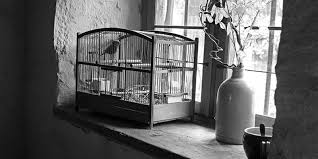
In Angelou's narrative, the caged bird represents the oppressed African American community, while the free bird represents the privileged white community.


The book begins with Angelou's childhood in Stamps, Arkansas, during the Great Depression. She describes the challenges she faced growing up in a segregated society and the impact of racial discrimination on her self-esteem and sense of identity. Angelou recounts her experiences of racism, such as being denied services due to her race and witnessing the injustices inflicted upon African Americans.


One of the central themes of the book is the power of literature and language as a means of escape and self-discovery. Angelou finds solace in books and poetry, which serve as a source of inspiration and empowerment throughout her life. Through her love for reading and writing, she discovers her own voice and the transformative potential of words.


The memoir also delves into Angelou's personal struggles, including the trauma of sexual abuse. She bravely confronts these experiences and their impact on her emotional well-being. Despite these hardships, Angelou portrays resilience and strength, emphasizing the importance of perseverance and the ability to rise above adversity.


"I Know Why the Caged Bird Sings" is a poignant exploration of the African American experience, capturing the complexities of race, gender, and identity in mid-20th century America. It highlights the power of literature, the resilience of the human spirit, and the importance of confronting and overcoming one's past. The book remains a significant contribution to American literature and a testament to Maya Angelou's remarkable life and literary talent.


In "I Know Why the Caged Bird Sings," Maya Angelou vividly portrays the harsh realities of racial discrimination prevalent in the society she grew up in. Angelou describes the strict segregation enforced during her childhood in Stamps, Arkansas. She depicts separate facilities for black and white individuals, such as schools, public transportation, and even public restrooms. The segregation laws known as Jim Crow laws were designed to enforce racial separation and perpetuate inequality.


Angelou recounts instances where African Americans were treated unfairly solely because of their race. For example, she describes being refused service at white-owned establishments or being given inferior treatment compared to white individuals. These experiences highlight the systemic racism and the dehumanising effects of such discrimination.


The memoir also touches on the violence and threats faced by African Americans. Angelou recalls the brutal murder of a young black man, Emmett Till, and the impact it had on her and the wider community. This event highlights the extreme racial violence and the fear that permeated the lives of African Americans during that time.


Angelou explores the internalized racism within the African American community. She portrays the damaging effects of societal expectations and stereotypes on the self-esteem and self-perception of individuals. Through her own experiences, Angelou sheds light on the struggle to overcome the internalized messages of inferiority that are ingrained through a racist society.


By vividly depicting these experiences and reflecting on their profound impact on her life, Angelou brings to light the deeply ingrained racial discrimination and inequality faced by African Americans during the era she writes about. Through her memoir, she raises awareness and promotes understanding of the systemic racism that shaped her personal journey and the experiences of many others.


The concept of the free bird and the caged bird is a recurring metaphor throughout the memoir.


The most obvious difference is that the free bird represents freedom, while the caged bird symbolises confinement. The free bird is able to soar and explore without limitations, while the caged bird is trapped within the confines of its cage.


The free bird has limitless opportunities and choices. It can explore new territories, enjoy the beauty of nature, and experience the world without restrictions. In contrast, the caged bird is limited in its movements and experiences, confined to the space of its cage and denied the freedom to explore the world.


The free bird represents privilege, often associated with the white community in the book. It symbolises the advantages and freedoms enjoyed by those who are not subjected to racial discrimination. On the other hand, the caged bird represents the oppressed African American community, facing limitations, discrimination, and the oppressive systems of racism.


The free bird has the ability to express itself freely through its songs and flight. It can vocalise its desires, emotions, and experiences without fear or constraint. In contrast, the caged bird is silenced and constrained by its surroundings, unable to fully express itself or communicate its true nature.


The free bird experiences joy, exhilaration, and the pleasures of freedom. It revels in its ability to explore, fly, and experience life to the fullest. In contrast, the caged bird suffers from the loss of freedom, yearning for escape and longing for the same joy and liberation experienced by the free bird.


Through the contrasting imagery of the free bird and the caged bird, Angelou emphasizes the stark disparities and injustices faced by the African American community in a racially segregated society. The metaphor serves to highlight the desire for freedom, equality, and the struggles endured by those who are oppressed and denied their basic rights.


Disclaimer: Images have been taken from the Google sites.

The Open Window by Saki (H.H. Munro), English Short Story, Questions answers, English analysis


"The Open Window" by Saki (H.H. Munro)


Who is the protagonist of "The Open Window"?

A: The protagonist is a man named Framton Nuttel.


Why does Framton Nuttel go to the Sappletons' house?

A: Framton Nuttel is visiting the Sappletons as a guest on the recommendation of his sister, who hopes the visit will help him recover from a nervous condition.


What does Vera tell Framton Nuttel about her aunt and cousins?

A: Vera tells Framton Nuttel that her aunt's husband and two younger brothers went hunting three years ago and never returned, but that her aunt and cousins still keep the window open and wait for them to come back.


What happens when the Sappletons return home?

A: When the Sappletons return home, they are surprised to find Framton Nuttel there and ask him if he has seen their missing family members. Before he can answer, Vera interrupts and tells them that he is mentally ill and thinks he has seen ghosts.


Why does Vera make up the story about the open window?

A: Vera makes up the story about the open window as a prank to entertain herself and to see how gullible Framton Nuttel is.


What is the theme of "The Open Window"?

A: One possible theme of the story is the power of storytelling and the ways in which people can manipulate reality through language. Another theme is the danger of jumping to conclusions and the importance of questioning one's assumptions.


Who is the author of "The Open Window"?

A: The author of "The Open Window" is Saki (H.H. Munro).


What is the main theme of "The Open Window"?

A: The main theme of "The Open Window" is deception and the power of imagination. It explores how the young girl, Vera, uses her vivid imagination to manipulate the perceptions of Mr. Nuttel.


What is the setting of "The Open Window"?

A: The story is set in the rural countryside at the home of Mrs. Sappleton. The events take place in the autumn season.


What is the plot of "The Open Window"?

A: The plot revolves around a nervous man named Mr. Nuttel, who visits the home of Mrs. Sappleton as part of his recuperation. He meets Vera, Mrs. Sappleton's niece, who tells him a made-up story about her aunt's tragedy involving an open window. Mr. Nuttel becomes increasingly agitated, and when Mrs. Sappleton and her two brothers return from their hunting expedition, they find Mr. Nuttel fleeing in fear.


What is the significance of the open window in the story?

A: The open window is a key element used by Vera to create a believable story. She tells Mr. Nuttel that her aunt keeps the window open to welcome back her husband and brothers, who were lost in a hunting accident. The open window serves as a focal point for Mr. Nuttel's anxiety and ultimately causes his hasty departure.


What is the role of the character Vera in "The Open Window"?

A: Vera is a mischievous and imaginative young girl who enjoys playing tricks on people. She becomes the primary catalyst for the events of the story, manipulating Mr. Nuttel's fears and creating an elaborate tale to deceive him.


How does the story "The Open Window" end?

A: The story ends with Mrs. Sappleton's return, oblivious to Mr. Nuttel's fears and confusion. The revelation that the hunters are safe contradicts Vera's story and leaves Mr. Nuttel embarrassed and anxious to escape.


How does the story end?

A:"The Open Window" is a short story written by H.H. Munro, also known as Saki. It revolves around a young girl named Vera, who tells a visitor a fictional story about her aunt's tragic experience with open windows. The story ends with a twist


What weakness does Framton Nuttel display?

How is it taken ill-advantage of by Vera?


A: In "The Open Window," Framton Nuttel displays a vulnerability or weakness related to his nerves and a tendency to be easily startled or frightened. When he visits Mrs. Sappleton's house as a guest, he initially appears to be suffering from a nervous condition. He seeks the tranquility of the countryside and hopes it will alleviate his nervousness. However, his weakness becomes more pronounced when Vera, Mrs. Sappleton's niece, starts telling him a fabricated story about her aunt's tragic loss, involving open windows and the return of her deceased husband and brothers.

Framton Nuttel's susceptibility to being startled is exploited by Vera, who takes advantage of his vulnerability to play a practical joke. She makes up the story about the open window and pretends to see the ghostly figures of Mrs. Sappleton's deceased relatives approaching the house through the meadow. The purpose of this deception is to frighten Nuttel, adding to his already fragile state of mind.

In the end, when Nuttel sees the supposed ghosts approaching the house through the open window, he becomes overwhelmed by fear and hastily flees from the scene, indicating his weakness in handling stressful or alarming situations. It is through this weakness that Vera successfully orchestrates her prank.


Disclaimer: images have been taken from Google sites. 


Tuesday, May 2, 2023

VIOLENCE NEVER PAYS, ENGLISH PROJECT, ICSE, ISC, CBSE, IGCSE, INTERNATIONAL BACCALAUREATE

 VIOLENCE NEVER PAYS, ENGLISH PROJECT, ICSE, ISC, CBSE, IGCSE, INTERNATIONAL BACCALAUREATE 


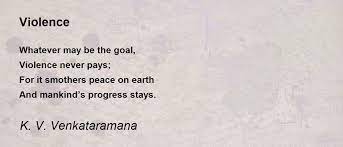
Violence plagues the world and has plagued the world through all history. Structural Violence may last for a specific period. Experience has established that the after-effects of Structural Violence linger on for generations. It destroys the very fabric of society.


The statement "violence never pays" is a moral and philosophical belief that emphasizes the negative consequences and long-term ineffectiveness of resorting to violence. Here are a few reasons why it is often argued that violence does not lead to desirable outcomes:

Escalation: Violence tends to escalate conflicts rather than resolve them. Responding to violence with more violence often leads to a cycle of retaliation, creating a continuous loop of harm and destruction. It becomes increasingly difficult to break free from this cycle and find peaceful resolutions.

Human suffering: Violence typically results in human suffering, both for the victims and the perpetrators. Physical harm, emotional trauma, and loss of life are common outcomes of violent acts. The pain inflicted upon individuals and communities can have long-lasting consequences, perpetuating a cycle of hatred and revenge.


Social and economic costs: Violent actions can have severe social and economic costs. The destruction of property, infrastructure, and resources can hinder development, destabilize societies, and lead to economic decline. Rebuilding and recovery efforts require significant resources and time, diverting them away from more constructive endeavors.

Undermining trust and cooperation: Violence erodes trust and cooperation among individuals and communities. It creates an atmosphere of fear, suspicion, and hostility, making it harder for people to work together towards common goals. Building sustainable and harmonious relationships becomes challenging in an environment marked by violence.

Legal and ethical consequences: Violence often violates laws and ethical principles. Engaging in violent behavior can result in legal repercussions, ranging from criminal charges to imprisonment. It is essential to respect the rule of law and promote ethical standards to maintain a just and orderly society.


Of course, it is important to acknowledge that historical examples exist where violence has been used to achieve short-term gains or secure certain objectives. However, the long-term consequences and negative impacts associated with violence are widely recognized, and non-violent means of conflict resolution are generally considered more desirable for fostering peace, justice, and stability.

Wars produced huge numbers of casualties. There is no doubt that the physical and psychological impacts of the atomic attacks continued for generations long after the actual attack. Similarly, the disruption caused in society continues for generations long after the active phase of the structural violence.

Hence, one would conclude that violence is and will always be evitable and abominable.


Disclaimer: images have been copied from the Google sites.

Monday, April 10, 2023

Dance Like a Man, Mahesh Duttani, Indian English Drama, English studies in India, BA (English Honours), MA English


Dance Like a Man By Mahesh Duttani


Born on 7th August, 1958 in Bangalore , Mahesh Duttani is an intellectually stimulating Sahitya Academy Winner . Dattanis play script casts its focus and locus entirely on the urban space, specifically rooted in the dynamics of domestic space. Mahesh Dattani is a Bangalore based dramatist and director. The themes of his plays have attracted the attention of a great number of readers and audiences in theatres. He has tried to bring hidden issues of society such as plight of women and transgender, gender discrimination, homosexuality child sex abuse etc. into light through his plays. He has shown the problems of city life in India in a significant manner in his plays. He has a striking artistic mind that makes him different from other dramatists.


The play Dance Like a Man is a stage play in two acts. The play was first performed at Chowdiah Memorial Hall, Bangalore on 22 September 1989 as a part of the Deccan Herald Theatre. Traditional Dance, in the play, is a form or a tool that enables the writer to tell his story. This drama explores and analyses the gender discrimination in a society, the injustice done only on the term of gender and the preference given to a male child over a female in an Indian family. The play explores the nature of the patriarchical tyranny that even men might be subject to.


In this two-act play, Dattani has tried to knit the story around three generations and their conflicts. The play deals with issues like problem of marriage and career, conflict between the tradition and modernity, patriarchal domination, plight of devdasis, gender roles etc.


Dattani portrays an Indian family in which Amritlal Parekh possessed unquestionable power over Jairaj and Ratna. The action of the play takes place in the big house of Amritlal which is located in centre of the Chennai city.  The drama was written in flash back mode.  Presently, the characters are Jairaj, 62 year old and Ratna, his wife ageing 60; Lata, their daughter, Viswas, her would-be-husband and Amritlal, Jairaj’s father. Amritlal Parekh being the head of the family, he declared himself to be responsible head for taking important decision of all their life. Amritlal as a father wishes his son to have the best, he also worries  that  his  son’s  choices  would  not  make  him anything if he pursued  them any  longer. He  gave his  son the freedom to practice dance instead of cricket as a young boy but he was worried when the hobby for dance as a boy grew into a passion for Jairaj as an adult. Jairaj desired to take his passion for dance as his profession and that would lead his son nowhere and he would not be able to support his family in future. Amritlal feared that his son, unable to take the role of man by the social norms, would fail to win the  love  and  respect  a  wife  has  for  her  husband. 


Amritlal was a reformist and freedom fighter yet a prudish and conservative. He supported India to get freedom from the Britishers. Ironically he controlled and framed strict regulations over his own son’s wishes. He rejects the freedom of his son who wanted to become a Bharatnatyam dancer. Father implements his wish on his son and wants him not to take up dance as his career because it is not a ‘male oriented’ profession. For Jairaj, Dance is a form or a means to express emotions and stands as the tool of defiance, revolt, negation of a particular way of life that was decided by his father, Amritlal. He starts dancing as a hobby.  Dance for his father is the profession of a prostitute, improper for his daughter-in-law and absolutely unimaginable for his son. He forbids Ratna from visiting the old devdasi who teaches her the intricacies of bharatnatyam. He cannot tolerate the sounds of the dancing bells that ring through their practice sessions. Jairaj becomes more headstrong because of the support of his wife, Ratna who also was interested in traditional form of dancing.  Amritlal dislikes the long-haired guru with an effeminate walk and cannot, most of all tolerate the idea of his son –a man- becoming a professional dancer. Amritlal Parekh makes a pact with Ratna. He will permit her career in dance only if she helps him pull Jairaj out of his obsession and make him a ‘manly’ man. Amritlal knew that dance would not help Jairaj to earn enough money and that would make him unworthy in the eyes of his wife Ratna. For Amritlal, dance was good as far as it remains a hobby but it was not proper to be taken as a profession.  Jairaj and Ratna both with a common passion for dance are victims of Amritlal the patriarch of the family. Even after Amritlal's demise Jairaj, his son cannot get rid of the expectations of his father which eventually leads him into depression and alcoholism. In contrast, Ratna at every stage cooperates with Amritlal for her benefit and pursues her passions till the end. Hegemonic masculinity norms can be traced to society's pressure on women to be groomed and look desirable. Man is declared to be the bread earner and he is expected to be in such a profession in which self-esteem is concerned with it, in Indian society. In the other term, man did not get freedom to pursue the profession of an art form like Bharatnatyam. Jairaj’s father equates the art of dance with prostitution.


Dance Like a Man is a play that does not present the character as pure White or Black but it shows their different shades in all possibilities. Jairaj, the male protagonist of the play becomes a victim of gender restrictions. Usually women become victims or suffer due to the patriarchal culture. But this play focuses on the plight of a male who tries to break the conventional roles allotted to his gender by the society. In this process, he loses his identity as an artist in society. Jairaj’s dreams are shattered as his father considers that Bhartanatyam is an effeminate thing that belongs to female gender. 


Shallow materialistic values of art and life v/s old spiritual values


The play deals with the conflict between art and society. It also focuses on the sense of competition among the artists themselves. Young Jairaj and Ratna are practicing dance in the house of Amritlal Parekh. He is representative of the society of the nineteen thirties and forties. In the earlier days Bhartanatyam was associated with temples and rituals. The art was preserved by Devadasis. They were the professional dancers in temples. They were exploited by the priests and rulers. Finally, due to the economic needs these people turned to prostitution. So, the dance form was ignored and neglected till nineteen thirties and forties.


In order to protect and continue any art form, the artist should raise above human weakness. It is a state of human consciousness that wraps up the distinction of male and female into a state of ‘wholeness’. In his self-discovery, Jairaj discovers that the divine essence of human self is neither male nor female. Gender discrimination is integrated in human consciousness and is closely associated with individual choices, self development and self-identity.


PORTRAYAL OF RATNA


The play tells the story that revolves mainly around Ratna, her aspirations as a good dancer and a good mother who expects perfect dancer in Lata. Her dominance over her husband is exposed by the playwright. Lata wants to marry Viswas and to gain favour of her parents, she invites Viswas to her house. When Jairaj and Ratna arrive, though late, they discuss about the forthcoming dance competition of Lata and her preparation. There is no harmony in their married life, both of them want to see Lata a winner and get selected for the Canadian festival. They are talking about mridanist (musician) whose arm is broken not paying attention to Viswas. Later, they apologize for their behaviour and accept his proposal on one condition that he will allow Lata to dance after marriage. Lata wins the competition and both the parents are overjoyed. They read reviews of appreciation by critics in the newspapers about Lata’s performance and speculate over her selection for the Indian Festival in Canada. By the use of flashback technique, the playwright reveals the past of Jairaj and Ratna and their confrontation with Amritlal, Jairaj’s father. Amritlal does not like Jairaj’s passion for the dance, especially for Bharatnatyam. He does not like Jairaj’s idea of growing hair long. He expects his son an adult and grown up and in this matter he expects Ratna’s help. But both Jairaj and Ratna never respect Amritlal’s selfish opinions. They leave the house impulsively but come back after two days humiliated, accepting Amritlal’s shelter. But during these two days, all the three are changed and some sort of transformation is sought in them. Amritlal is ready to pay Jairaj and permits and advises him to perform dance as a profession. He asks Ratna to help him making Jairaj an adult and grown up and that he will permit her to dance. The play ends on a happy note that both Jairaj and Ratna despite earlier differences get mutually united and they perform the dance in the heaven without missing a step or a beat.


Ratna seems to be a selfish woman altogether, a woman of self-esteem and over-ambition. This is also displayed in her relationship with her daughter and an infant son. When she is young, she practices hard to gain perfection in dance. She all the time thinks to win appreciation of the audiences. She forgets her motherly duty towards her infant son, Shankar. She along with Jairaj goes for night performances keeping Shankar in the custody of ayas who offers him opium to make him sleep for more time and the ayah gets long peaceful sleep. She finds Shankar died of overdose of opium. She accuses Jairaj for that also and expected him at home near Shankar when she performed in the public. In her youth, Ratna cares only for the dance and her appreciation by the others. She neglects even her motherly duties. In contrast, when she is old, to be precise 60, she cares for her daughter and her performance. As a good mother, she dreams her daughter successful. She takes hard efforts for that also. She proudly tells Jairaj about Lata’s success and decides to take very serious efforts for her daughter’s success. Ratna is portrayed as a woman who is more concerned with her own career than her duty to the family. In an Indian family system, it is important on the part of a woman to perform dual or plural duties. She has to maintain her self-interest as well as perform roles of sister, daughter, mother, mother-in-law, sister-in-law etc.


Disclaimer: Images have been taken from Google sites.

Wednesday, March 15, 2023

SHE WALKS IN BEAUTY ~ LORD BYRON, ENGLISH POETRY, ICSE, ISC, CBSE, IGCSE, BA ENGLISH HONOURS, MA ENGLISH


SHE WALKS IN BEAUTY ~ LORD BYRON


"She Walks in Beauty" is a poem by Lord Byron, first published in 1815. The poem is a tribute to a woman's beauty and her grace. It is considered one of Byron's most famous and widely anthologized works. 

Structure: The poem is structured into three stanzas, each with six lines, and follows an ABABAB rhyme scheme. The language is lyrical and evocative, with the use of vivid imagery and contrasting images. 

It is a poem that is rich in imagery. Lord Byron's use of language creates vivid pictures in the reader's mind, bringing the woman's beauty to life in a powerful way. Some of the key imagery in the poem includes: 

"She walks in beauty, like the night / Of cloudless climes and starry skies" - In these opening lines, the woman's beauty is compared to the night sky. This imagery creates a sense of mystery and wonder, as the reader is drawn into the woman's beauty.


"One shade the more, one ray the less, / Had half impaired the nameless grace" - Here, the speaker suggests that the woman's beauty is delicate and fragile. The use of light and shadow adds depth and complexity to the imagery, and creates a sense of balance and harmony. 

"And on that cheek, and o'er that brow, / So soft, so calm, yet eloquent" - In these lines, the woman's face is described as both peaceful and expressive. The use of contrasting images creates a sense of tension and complexity, highlighting the woman's beauty and inner grace. 

"A mind at peace with all below, / A heart whose love is innocent" - The poem's imagery extends beyond physical appearance to capture the woman's inner beauty. The use of natural imagery, such as the peace of mind and innocence of heart, creates a sense of purity and goodness. 

Overall, the imagery in "She Walks in Beauty" is central to the poem's power and beauty. Lord Byron's use of language creates a vivid and captivating picture of the woman, emphasizing her beauty, grace, and inner goodness. 

Stanzawise Explanation: The first stanza describes the woman's physical appearance, using imagery of light and darkness to create a sense of harmony and balance. The speaker notes that the woman's beauty is not solely based on her physical appearance but also on her inner qualities, such as her kindness and intelligence. 

The second stanza continues with the theme of the woman's inner beauty, describing her as "a heart whose love is innocent." The speaker portrays her as a symbol of purity and goodness, contrasting her with the darkness of the night sky. 

The third and final stanza brings together the contrast between light and darkness, praising the woman's beauty as a combination of both. The speaker suggests that the woman's beauty is so powerful that it can even bring out goodness in the midst of darkness.

Overall, "She Walks in Beauty" is a romantic poem that celebrates the beauty and grace of a woman, while also recognizing the importance of inner beauty and character. The poem's use of vivid imagery and contrasting images creates a sense of harmony and balance, adding to its overall appeal.


Inner Theme:

"She Walks in Beauty" is a poem written by Lord Byron, which describes the beauty of a woman. The poem's inner theme is the speaker's admiration of a woman's external and internal beauty. The poem's opening lines describe the woman's physical beauty, with references to her "raven" hair and "smiles that win." However, the speaker also notes that her inner beauty is just as impressive, describing her as having a "mind at peace with all below." Throughout the poem, the speaker celebrates the harmony between the woman's physical and spiritual beauty. He sees her as a perfect embodiment of grace and goodness, and his admiration for her shines through in his elegant and lyrical language. In summary, the inner theme of "She Walks in Beauty" is the speaker's appreciation of a woman's beauty, both inner and outer, and how these qualities combine to create a striking and captivating presence.


Byron’s mastery: 

"She Walks in Beauty" is a special poem because it captures the essence of beauty and admiration in a unique and elegant way. Lord Byron's use of language and imagery creates a vivid picture of the woman's beauty, while also highlighting the importance of inner beauty. 

The poem's structure, which consists of three stanzas with six lines each, creates a sense of balance and harmony, which further emphasizes the theme of the woman's beauty. The use of contrast, such as the contrast between light and dark in the woman's appearance, adds depth to the poem and makes it more memorable. 

Additionally, "She Walks in Beauty" is considered a romantic poem and has been widely appreciated for its portrayal of idealized love. The poem's timeless quality has made it a favorite among readers and has inspired many adaptations and interpretations over the years.

Overall, Lord Byron's "She Walks in Beauty" is a special poem because it combines exquisite language, vivid imagery, and timeless themes to create a work of art that celebrates beauty and admiration in a unique and unforgettable way.


Lord Byron’s Romaticism: 

"She Walks in Beauty" is a poem that is associated with the Romanticism movement, which was a literary and artistic movement that emerged in the late 18th and early 19th centuries in Europe. Romanticism celebrated individualism, emotion, nature, and imagination, and rejected the rationalism and order of the Enlightenment. 

The poem's Romanticism is reflected in its celebration of beauty and the natural world. The woman's beauty is described in terms of the natural world, with references to the stars, clouds, and night. The speaker sees her as a perfect embodiment of grace and goodness, and his admiration for her shines through in his elegant and lyrical language. 

Furthermore, the poem's emphasis on emotions and feelings is another hallmark of Romanticism. The speaker's admiration for the woman is based on his emotional response to her beauty, which he describes as a "tender light" that shines from within her. 

Finally, the poem's use of contrast, such as the contrast between light and dark in the woman's appearance, is another characteristic of Romanticism. This contrast creates a sense of tension and complexity that is typical of Romantic literature. 

Overall, "She Walks in Beauty" is a poem that embodies many of the key themes and characteristics of Romanticism, including a celebration of beauty, a focus on emotions and feelings, and an emphasis on the natural world and the power of imagination.


Disclaimer: Images have been taken from the Google sites.


IMPORTANCE OF SELECTING "BENGALI" AS A SUBJECT AT XI XII LEVEL IN ISC CBSE CURRICULUM

  Hi, I'm Susmita . I've been teaching for about 30 years now. I taught at schools at the outset of my teaching career. So, you can ...