Search This Blog besttutorskolkata.blogspot.com www.dbhattacharjee.com

Showing posts with label ENGLISH PROJECT. Show all posts

Wednesday, May 3, 2023

I Know Why the Caged Bird Sings, Maya Angelou, American English literature, English Project, ICSE, ISC, IGCSE, IB


"I Know Why the Caged Bird Sings" is an autobiographical coming-of-age novel written by Maya Angelou. Published in 1969, it is the first volume of Angelou's seven-volume memoir series. The book explores themes of racism, identity, self-discovery, and resilience, providing a powerful account of Angelou's early years.


In Angelou's narrative, the caged bird represents the oppressed African American community, while the free bird represents the privileged white community.


The book begins with Angelou's childhood in Stamps, Arkansas, during the Great Depression. She describes the challenges she faced growing up in a segregated society and the impact of racial discrimination on her self-esteem and sense of identity. Angelou recounts her experiences of racism, such as being denied services due to her race and witnessing the injustices inflicted upon African Americans.


One of the central themes of the book is the power of literature and language as a means of escape and self-discovery. Angelou finds solace in books and poetry, which serve as a source of inspiration and empowerment throughout her life. Through her love for reading and writing, she discovers her own voice and the transformative potential of words.


The memoir also delves into Angelou's personal struggles, including the trauma of sexual abuse. She bravely confronts these experiences and their impact on her emotional well-being. Despite these hardships, Angelou portrays resilience and strength, emphasizing the importance of perseverance and the ability to rise above adversity.


"I Know Why the Caged Bird Sings" is a poignant exploration of the African American experience, capturing the complexities of race, gender, and identity in mid-20th century America. It highlights the power of literature, the resilience of the human spirit, and the importance of confronting and overcoming one's past. The book remains a significant contribution to American literature and a testament to Maya Angelou's remarkable life and literary talent.


In "I Know Why the Caged Bird Sings," Maya Angelou vividly portrays the harsh realities of racial discrimination prevalent in the society she grew up in. Angelou describes the strict segregation enforced during her childhood in Stamps, Arkansas. She depicts separate facilities for black and white individuals, such as schools, public transportation, and even public restrooms. The segregation laws known as Jim Crow laws were designed to enforce racial separation and perpetuate inequality.


Angelou recounts instances where African Americans were treated unfairly solely because of their race. For example, she describes being refused service at white-owned establishments or being given inferior treatment compared to white individuals. These experiences highlight the systemic racism and the dehumanising effects of such discrimination.


The memoir also touches on the violence and threats faced by African Americans. Angelou recalls the brutal murder of a young black man, Emmett Till, and the impact it had on her and the wider community. This event highlights the extreme racial violence and the fear that permeated the lives of African Americans during that time.


Angelou explores the internalized racism within the African American community. She portrays the damaging effects of societal expectations and stereotypes on the self-esteem and self-perception of individuals. Through her own experiences, Angelou sheds light on the struggle to overcome the internalized messages of inferiority that are ingrained through a racist society.


By vividly depicting these experiences and reflecting on their profound impact on her life, Angelou brings to light the deeply ingrained racial discrimination and inequality faced by African Americans during the era she writes about. Through her memoir, she raises awareness and promotes understanding of the systemic racism that shaped her personal journey and the experiences of many others.



The concept of the free bird and the caged bird is a recurring metaphor throughout the memoir.


The most obvious difference is that the free bird represents freedom, while the caged bird symbolises confinement. The free bird is able to soar and explore without limitations, while the caged bird is trapped within the confines of its cage.


The free bird has limitless opportunities and choices. It can explore new territories, enjoy the beauty of nature, and experience the world without restrictions. In contrast, the caged bird is limited in its movements and experiences, confined to the space of its cage and denied the freedom to explore the world.


The free bird represents privilege, often associated with the white community in the book. It symbolises the advantages and freedoms enjoyed by those who are not subjected to racial discrimination. On the other hand, the caged bird represents the oppressed African American community, facing limitations, discrimination, and the oppressive systems of racism.


The free bird has the ability to express itself freely through its songs and flight. It can vocalise its desires, emotions, and experiences without fear or constraint. In contrast, the caged bird is silenced and constrained by its surroundings, unable to fully express itself or communicate its true nature.


The free bird experiences joy, exhilaration, and the pleasures of freedom. It revels in its ability to explore, fly, and experience life to the fullest. In contrast, the caged bird suffers from the loss of freedom, yearning for escape and longing for the same joy and liberation experienced by the free bird.


Through the contrasting imagery of the free bird and the caged bird, Angelou emphasizes the stark disparities and injustices faced by the African American community in a racially segregated society. The metaphor serves to highlight the desire for freedom, equality, and the struggles endured by those who are oppressed and denied their basic rights.


Disclaimer: Images have been taken from the Google sites.

Tuesday, May 2, 2023

VIOLENCE NEVER PAYS, ENGLISH PROJECT, ICSE, ISC, CBSE, IGCSE, INTERNATIONAL BACCALAUREATE

 VIOLENCE NEVER PAYS, ENGLISH PROJECT, ICSE, ISC, CBSE, IGCSE, INTERNATIONAL BACCALAUREATE 


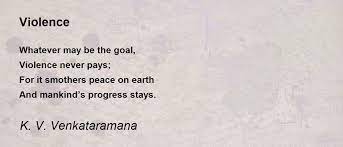
Violence plagues the world and has plagued the world through all history. Structural Violence may last for a specific period. Experience has established that the after-effects of Structural Violence linger on for generations. It destroys the very fabric of society.


The statement "violence never pays" is a moral and philosophical belief that emphasizes the negative consequences and long-term ineffectiveness of resorting to violence. Here are a few reasons why it is often argued that violence does not lead to desirable outcomes:

Escalation: Violence tends to escalate conflicts rather than resolve them. Responding to violence with more violence often leads to a cycle of retaliation, creating a continuous loop of harm and destruction. It becomes increasingly difficult to break free from this cycle and find peaceful resolutions.

Human suffering: Violence typically results in human suffering, both for the victims and the perpetrators. Physical harm, emotional trauma, and loss of life are common outcomes of violent acts. The pain inflicted upon individuals and communities can have long-lasting consequences, perpetuating a cycle of hatred and revenge.


Social and economic costs: Violent actions can have severe social and economic costs. The destruction of property, infrastructure, and resources can hinder development, destabilize societies, and lead to economic decline. Rebuilding and recovery efforts require significant resources and time, diverting them away from more constructive endeavors.

Undermining trust and cooperation: Violence erodes trust and cooperation among individuals and communities. It creates an atmosphere of fear, suspicion, and hostility, making it harder for people to work together towards common goals. Building sustainable and harmonious relationships becomes challenging in an environment marked by violence.

Legal and ethical consequences: Violence often violates laws and ethical principles. Engaging in violent behavior can result in legal repercussions, ranging from criminal charges to imprisonment. It is essential to respect the rule of law and promote ethical standards to maintain a just and orderly society.


Of course, it is important to acknowledge that historical examples exist where violence has been used to achieve short-term gains or secure certain objectives. However, the long-term consequences and negative impacts associated with violence are widely recognized, and non-violent means of conflict resolution are generally considered more desirable for fostering peace, justice, and stability.

Wars produced huge numbers of casualties. There is no doubt that the physical and psychological impacts of the atomic attacks continued for generations long after the actual attack. Similarly, the disruption caused in society continues for generations long after the active phase of the structural violence.

Hence, one would conclude that violence is and will always be evitable and abominable.


Disclaimer: images have been copied from the Google sites.

Friday, November 11, 2022

Nurture nature and Nature will nurture, English Project, ICSE, ISC, CBSE, English Essay


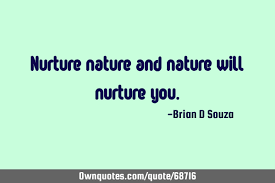
Nurture nature and Nature will nurture you

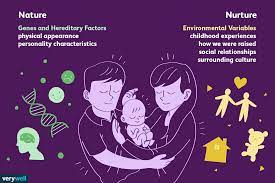
Nature relates to our INNATE HUMAN QUALITY and THE WORLD ENVIRONMENT as well.

Nature holds forth the belief that hereditary traits found in our genes make us who we are. It’s, believable but not very convincing when we consider the theory of nurture. Human beings learn new things every day, as soon as we come in to the world, our learning process begins. As a new-born baby, we slowly learn and adapt in order to survive in a new environment which is quite unlike that of our mother’s wombs, our first environment in which we first grew up from a foetus state, adapted to and developed in. The home environment parents and the siblings play a huge role in determining personality. Influences from outside the family are also very important to the development of one’s personality. But everything starts at home.


Nature has given us many things in life and one of them is talents. Either we are born as the only individual in our family or it is in our genes. Furthermore, nature plays a vital role in deciding the future of a child. Many singers in this era are born with beautiful voices. They did not need any nurturing. Their talent took them to heights they couldn’t even imagine.

For instance, some of the great legends like Lata Mangeshkar, Asha Bhosle, Kishor Kumar had soulful voices. Also, they were the ones who sang from their childhood days. They started their careers and became successful at a very early age. Moreover, they did not get much teaching but still are the legends of all time.

Apart from singing, there are other talents that nature has given us. Various scientists like Albert EinsteinIsaac Newton, Galileo Galilei, started their work in their teenage years. They had amazing intellectualism, because of which they got recognition in their entire world. Furthermore, these scientists did not get any mentoring. They did everything on their own. Because they had extraordinary intelligence and ambition in life.


Nature refers to the environment we are living in. We have put huge pressure on nature by using its resources unmindfully. At the rate at which the population of the world is increasing, the resources of nature are not renewed at that pace, as a result, nature cannot support us for long. All human activities are dependent on three main resources: food, energy and timber and unfortunately, these come from nature. Human desires, dreams and demands have taken a toll on nature. This has resulted in deforestation, degradation of the natural fertility of the soil, loss of biodiversity and pollution. Because of this, the natural ecosystems are disturbed. Another disastrous repercussion of our negligence is climate change. This has become a major reason for the extinction of many species of plants and animals and many are on the verge of extinction. The impact of global warming is not only limited to plants and animals but also to humans. The reality is that we have doomed ourselves by interfering with nature. 

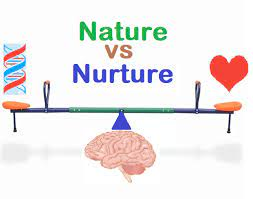
Nature is entirely dependent on the genetic combination of an individual which dictates their character and appearance. On the other hand, nurture is dependent on the environmental factors that an individual gets exposed to which end up shaping his or her personality. Nature and nurture influence individuals to a certain extent because individuals get exposed to both of them in one way or the other dictating their development process.

Through nurture, an individual acquires specific attributes from the environment that surrounds them. When a child is born, for instance, its mind is black and empty. It is through its interaction with the surrounding and the people around it that will make the infant acquire some of their traits through learning, observation and aping their conducts. In other words, nurturing is dependent on the environment, experience, and learning.

Now, our urgent intervention is required at this stage, not to destroy nature but to preserve it. Most important is to ‘Speak up’, ‘Train’ and ‘Teach’ our kids and people around us about the necessity of conserving nature. Set an example for others by using and buying reused, repaired and recycled products. Walk or cycle your way to most places, use public transport, save water, become energy efficient, and use less paper. We should let our children grow in the company of nature, let them discover the joy of watching birds build their nests, honey bees sucking nectar, rabbits hopping and a sapling growing into a tree. Keep them away from gadgets and close to nature, if we want to save our future. 

On the other hand, the nurturing of a person is important. Because hard work beats talent. With proper mentoring and practice, a person can achieve success in life. If a person has an environment in which everybody is in the same profession and are successful in it.


An infant develops an emotional attachment to its parents because of the love and affection it receives. Moreover, children who are given proper care and affection will reciprocate the same while growing up. On the contrary, infants who receive harsh treatment from their parents will develop withdrawal symptoms while growing up. Also, the infants also try and learn how and what to talk by studying the speech of those around them. The cognitive development comes from the exposure that the infant receives and conditions surrounding it. There is a great chance that the person will land up in the same profession and will achieve heights. Because in that environment he will get proper nurturing.

Furthermore, he will also be able to perform better over the years. “Hard work always pays off”. This idiom is always true and nobody can deny that. If a person has true dedication then it can beat talent. Various singers, dancers, musicians, businessmen, entrepreneurs did work really hard for years.

And because of that, they got recognition in the entire world. In these categories, musicians are who achieved heights only with their hard work and constant practice.

Psychologists have discovered that both nature and nurture are responsible for the development of an individual. Both factors interact with each other and play a crucial role in shaping up the conduct of an individual. It is true that there are no shortcuts to success. Various known legends like Bob Dylon. Lou Reed, Elvis Prisley, Michael Jackson worked hard throughout their lives. As a result, they were some of the great personalities in the entire world.

Disclaimer: Images have been taken from the Google sites.


Tuesday, October 25, 2022

A TELEVISION SHOW REVIEW, ISC , ICSE, CBSE, ENGLISH PROJECT


BEAUTY PAGEANT: A TELEVISION SHOW REVIEW

 By a TV Show critic

Beauty Wars Logline

Kolkata, 25th October, 2022: Indian Cosmetology teams compete for a  Rs. 500,000 prize doing makeovers in various settings across the country. The show has been broadcast every Sunday at 9 pm. Each week, teams will be assigned a different location to find individuals who will provide the most stunning results when offered fashion, hair, and makeup services. The audience will vote via Twitter, Facebook, telephone, or web for the best team based on the makeover results. To stay alive for the grand prize, each team must carefully select their participants and convince them to go along with that week’s theme. For example, week one might require the team to find a male and a female with long hair and convince them to cut it short. Celebrity makeup artists and fashion designers will also weigh in on the results and offer professional critique of the design teams. Scoring will be similar to Dancing with the Stars, where both set of votes will count. The excitement of different sets lends a feel of The Great Race while incorporating the challenges of The Apprentice.


The Show on TV:

The show was slotted on 24th October at 8 in the evening. It had a thorough public relations activity being carried out for over a month. The viewers count passed well over 10 millions at the peak. It went on for over three hours. The nature of beauty shop gossip adds to that Big Brother appeal. Additional elements of the show  included: 1. Video blogging of content that does not make each week’s episode 2.  Behind the scenes interviews with contestants and their participants 3.  Instagram feed of steps of the makeover prior to the big reveal on competition night. The show was off with a two-hour slot and a one-hour results show for the contest. The end twist that is not revealed to the contestants. It was a visit back to the participants to see if they were still sporting their new look or if they had reverted to their original choices. Bonus points awarded for success added to their the balance and offered an eliminated contestant a chance to compete in the final round.

The Purpose and Motivation

The cosmetics industry has a world wide appeal to the highest number of consumers, especially the young people. The industry is also growing at a great pace. The fund comes from them. Their profit sky rockets from the upstream marketing. The purpose of the show is to create a massive number of fan base.


The audience in general are made aware of the need to look good. They are given this message that any one can look good if one follows the strict regimen.

Conclusion:

No doubt, this world is suffering from the vice of abundance. This is the third generation having their enough resources to keep themselves secured lifelong. Thanks to their accumulated wealth. Now comes the need to compete for looking good, being impressive before the world and take it on their stride. The show has been a success for this generation though it side lined the need to sustain this beauty through the rigours of dieting and Yoga.

Disclaimer: Images have been taken from Google sites.

Tuesday, October 18, 2022

HARD WORK Vs SMART WORK, ENGLISH PROJECT, ICSE, ISC, CBSE


HARD WORK Vs SMART WORK

People have this impression that working hard can help us achieve our dreams and aspirations. But finding what’s better between hard work and smart work is quite a debate. Hard workers are very consistent. They would not budge until the goal is met. They do not gauge the progress; they only love continuing their work with labour. Hard work refers to putting in strenuous hours with orientation largely on quantity with no innovation and flexibility. It’s more routinely and monotonous. Deriving pleasure out of it is impossible. Often satisfaction takes a back seat. A person’s perspective of how they do activities is referred to as “working hard.” This is related to specific characteristics such as punctuality, perseverance, and flexibility. Others may regard you as hardworking if you come to work early and leave late to do your duties, for example. Manual work or mental activities that require a lot of thinking are frequently involved in hard work. Completing things takes a lot of effort or endurance for hard workers. Some people regard hard work occupations to be entry-level or tasks that you take before moving on to a less physically demanding role.


If both intellect and hard effort are combined, one may achieve tremendous heights and live a better and more pleasant life. In due time, such a person will receive all of the honours and respect he or she deserves. The reason for this is that a planned strategy that incorporates both smart and hard effort can help you achieve your objective. Hard work will never pay off if you aren’t astute. As a result, it is advised that smart work and hard work (Smart Work versus Hard Work) be combined wherever possible.

Smart work refers to finding effective and efficient ways to complete one or multiple tasks while also managing time and quality both. It explores effective ways to accomplish work, be it delegating, prioritizing or organising the working process in a smarter way. Since, smart work aims to manage time effectively; it can achieve end goals within the deadline and without compromising with the quality. Smart work has a more holistic approach to tasks than hard work. Despite yielding results, working hard incurs lots of time and energy while working smartly includes more work in a lesser amount of time. Working smart includes having better judgment, thorough planning and meticulous organisation to execute the work at hand. Smart workers come up with creative and rational ways. They are being adaptable to situations. They are being spontaneous in their actions and thoughts. They bear updated Knowledge of various prospects of the work. They have the knowledge of the networks. They are capable to make appropriate decisions at uncertain moments. They focus on improvisation. They know how and where to invest time and money.


Hard work necessitates a great deal of dedication and sincerity on the part of the individual, and it is not an easy path to pursue. No matter how difficult the circumstance is, a dedicated worker must continue to strive for what he considers to be worthwhile. The Hard Worker achieves success despite putting in long hours at work and forgoing many of life’s conveniences.

One can combine hard-working skills with brilliant work by planning the required tasks. As a result, this will allow for proper time management. Delegate the small jobs to someone else who is available so that one’s mind is free to focus on the critical tasks. Enhance the communication skills and keep track of quality instead of quantity of work.

“The Crow and the Pitcher,” is a perfect example of hard Work vs. smart Work.  This does not negate the need for hard work; nevertheless, inventive work can change the game when hard work is no longer effective. Despite time constraints, people who work hard are goal-oriented. Unfortunately, because they are unaware of how dynamic the situation is, their intense concentration frequently leads them astray. This is the time when all of your efforts will be rewarded.


Smart professionals employ innovative approaches. If you work wisely, you’ll frequently search for shortcuts to help you achieve your objectives faster and with less effort. Depending on the individual or the business, the perception of someone who works intelligently may alter. A computer programmer, for example, could automate programming jobs so that they don’t have to create distinct code for each one. If one uses one’s intelligence and analytical thinking skills properly, one can achieve the goal in less time and with less resource and energy usage. If one combines both smart and hard work, one can achieve tremendous heights and live a better and more comfortable life. This will eventually help one gain well-deserved praise and attention. A systematic strategy combining smart work and hard work is necessary to achieve one’s goal. As a result, it is recommended that smart work and hard work be integrated whenever possible, as they both complement and fill in for each other when needed.

Disclaimer: Images are taken from Google sites

IMPORTANCE TO REWRITE HISTORY FREE FROM BIAS, ENGLISH PROJECT, ICSE, CBSE, ISC, INDIAN HISTORY


GROWING IMPORTANCE TO REWRITE HISTORY FREE FROM BIAS AND OBJECTIVE TO MISLEAD NEXT GENERATIONS

History is all about the past. In almost every country, city, town and village throughout the world, a large number of existing buildings were built in the past to meet the needs and aspirations of people, now dead. This is most obvious in existing temples, churches, mosques, fireplaces, houses, public buildings, and so on. The systems of governments, political ideas, religious beliefs, art, architecture, cultural practices, educational systems, customs and behaviours are all products of the past, recent or remote. By definition history is a continuous, systematic narrative of past events relating to a particular people, country, period, person, etc. It is written in a chronological order. It is important that history per se must be a true and factual record of events as they happened. This implies that history must record all the good, bad or ugly that may be associated with any period of time, event or personality. Opinions, perceptions or commentary on history and historical events should not be construed as history as they will vary from individual to individual.


History is precisely the study of this human past. The past is our heritage; we are part of it and the past is part of us in all aspects: Be it culture, behaviour, religious faith and practices, be it rituals, be it the tradition of political, social and economic systems. It is reflected in our day-to-day living. It moulds the outlook of the younger generation. By turning the past into a narrative, history creates a public ethos and influences culture. From architecture to film, and from ancient India to Partition etc it encompasses aspects to give a clear idea of the past.

It provides societies and individuals with a dimension of longitudinal meaning over time which outlives the human life span. It connects us with our past. History also allows us to peep into the future by providing precedents for contemporary actions and forewarning against the repetition of past mistakes. From its sense of continuity, history offers the apparent form and purpose to the past, the present and the future. 

As memory is to the individual, so history is to the community or the society. Without memory, individuals find great difficulty in relating to others. We all move ahead through the past of our own cultures, own civilisations, and values and it is this accumulation of ideas and experience, transmitted through education and sheer daily living that gives our thoughts meaning and the patterns and purpose of our actions. It is not that we live in the past but we are defined by it, and so the success of even the most forward-looking developments must inevitably rest on their relation to the ideas and practices of the society.


Problem of writing history: There is a tendency among historians to act as judges and give moral sermons. Historians must write and rewrite history. They are not supposed to be moral judges. Therefore, we must not forget that we cannot fully understand or appreciate the work of a historian unless we have first grasped the standpoint from which he himself approaches it, and that standpoint is itself rooted in social and historical background. A publicly shared past imparts a collective memory and identity. Textbooks are viewed as officially approved documents — even if they are privately produced and have no official sanction — and are therefore believed to be associated with state power. Significantly, they do shape the perceptions of the young because children are impressionable. There is no doubt that most history across the world has been written with a strong bias towards the victor and those in power. History of World War two is perhaps the best example where mainly British and Americans have been glorified and credited with achieving victory over Nazi Germany. Children depend on adults to learn about the past, and that is what makes history the most challenging school subject. The poorly taught history matters even more than well-taught history, simply because when history does not arouse curiosity or impart the tools of analysis, it creates an emotional barrier for further inquiry.

Indian History can be divided in five broad periods – Vedic period from 6,500 BC to 1,000 BC, Golden period from 500 BC to 800 AD, Muslim period from 1,000 AD to 1,700 AD, British period from 1,700 AD to 1947 AD and finally the period after independence in 1947 which may be termed as contemporary History of India. The first two periods from 6,500 BC to 800 AD have a lot of gaps and the available history is rather sketchy. Without a doubt there is a need to fill the gaps and add more details were available. Muslim and British periods, as also contemporary history of India, are fairly well chronicled and documented. Muslim and British period history is written mainly from their perspective as most historians were commissioned by them. Therefore, Indian perspective is missing and hence the need for correction and addition of details where required. History related to Indian freedom struggle does appear to be loaded in favour of Congress. It is all about Nehru and Gandhi while contribution of others like Sardar Patel and a host of others has been minimized. Those who were part of the struggle but disagreed with Congress, like Subhash Chander Bose, appear to have been given a short shrift. Contemporary history since 1947 is heavily biased with role and achievements of Congress party and its leaders being overstated while their follies have either been down played or omitted.

Given the situation in our country today, any move to change anything in history as it stands today will give rise to a fierce, and mostly meaningless, political debate. The task therefore must be entrusted to an eminent panel that draws on best available minds in the country. It must not have any political representation. They must be tasked to chronicle history as it happened and how it happened with logical deductions. They must avoid adding any personal commentary, interpretations or perceptions.

Disclaimer: Images have been taken from Google sites.

IMPORTANCE OF SELECTING "BENGALI" AS A SUBJECT AT XI XII LEVEL IN ISC CBSE CURRICULUM

  Hi, I'm Susmita . I've been teaching for about 30 years now. I taught at schools at the outset of my teaching career. So, you can ...