Search This Blog besttutorskolkata.blogspot.com www.dbhattacharjee.com

Showing posts with label Indian English Drama. Show all posts

Saturday, May 6, 2023

The Guide by R.K. Narayan, Indian English Play, BA English Honours, MA English, Indian English Drama


The Guide by R.K. Narayan is a novel that explores the life of a man named Raju, who starts off as a tour guide and ends up becoming a spiritual leader. The story raises several important narrative questions and provides thought-provoking answers to them. "The Guide" is a novel by R.K. Narayan that tells the story of Raju, a former tour guide who becomes a spiritual leader in a small village. The novel raises a number of important narrative questions and provides answers to them throughout the story.


What is the role of fate in a person's life?


Throughout the novel, Narayan explores the concept of fate and how it shapes a person's life. Raju's life is a prime example of this. He starts off as a tour guide by accident and ends up becoming a spiritual leader by chance. Narayan seems to suggest that fate plays a significant role in a person's life, but it's up to the individual to choose how they respond to it.


What is the relationship between illusion and reality?


Narayan plays with the idea of illusion and reality throughout the novel. Raju's entire persona is built on illusion - he pretends to be a holy man when he is not. However, Narayan suggests that even reality is an illusion in its own way, as it is shaped by our perceptions and experiences. The line between illusion and reality is therefore blurred, and it's up to the individual to determine what is true and what is not.


What is the meaning of success?


Success is a central theme in The Guide. At the beginning of the novel, Raju measures success by how much money he makes as a tour guide. However, as the story progresses, he realizes that success is not just about material wealth. Success is about finding purpose and meaning in life, and Raju achieves this by becoming a spiritual leader.


What is the nature of human relationships?


Human relationships are complex and multi-faceted, and Narayan explores this idea throughout the novel. Raju's relationships with his mother, Rosie, and Velan are all different, and they change and evolve throughout the story. Narayan suggests that relationships are not fixed, and they require effort and understanding to work.


What is the role of forgiveness in life?


Forgiveness is a central theme in The Guide. Raju is able to find redemption and meaning in life by forgiving himself for his past mistakes. Narayan suggests that forgiveness is essential for personal growth and spiritual development, and it's up to the individual to choose whether to hold on to grudges or let them go.


What motivates Raju to become a spiritual leader?


Raju's motivation to become a spiritual leader is initially driven by his desire to escape from the consequences of his past mistakes. He is falsely accused of a crime and ends up spending time in prison. When he is released, he realizes that his reputation is ruined and he has no means of making a living. He decides to reinvent himself as a holy man to gain the respect and admiration of the villagers. However, as Raju becomes more involved in his role as a spiritual leader, he begins to genuinely believe in his own teachings and finds a sense of purpose in helping others.


How does Raju’s relationship with Rosie evolve over the course of the story?


Raju's relationship with Rosie is initially based on a business transaction, as he serves as her tour guide and eventually becomes her lover. However, as their relationship develops, Raju becomes possessive and controlling, which leads to their eventual separation. Later in the story, Rosie returns to the village and seeks Raju's help, which causes Raju to re-examine his feelings for her and the nature of their relationship. Ultimately, their relationship is resolved in a surprising and tragic way.


What is the significance of the railway track that runs through the village?


The railway track is a recurring motif in the novel that represents both progress and danger. On one hand, the track symbolizes the modernization and development that is transforming India during the time period in which the story takes place. On the other hand, the track is a physical reminder of the potential dangers and risks that come with progress. In the climactic scene of the novel, the railway track serves as a symbol of the choice that Raju must make between his own self-interest and the greater good of the community.


What is the ultimate message or theme of the novel?


One of the main themes of the novel is the idea of redemption and the possibility of change. Through the character of Raju, the novel explores the idea that it is never too late to make amends for past mistakes and find a sense of purpose in life. Another theme of the novel is the conflict between tradition and modernization, as the characters grapple with the changes that are taking place in their society. Ultimately, the novel suggests that these themes are intertwined and that true progress can only be achieved through a combination of preserving tradition and embracing change.


Overall, The Guide is a thought-provoking novel that raises several important narrative questions about fate, illusion and reality, success, human relationships, and forgiveness. Narayan provides insightful answers to these questions, but ultimately leaves it up to the reader to draw their own conclusions.


Please write motifs, themes, imageries and symbolism used in The Guide by R.K. Narayan?


Motifs:


Trains and railways: The railway tracks and the trains running on them serve as a recurring motif throughout the novel. They represent both progress and danger. It symbolize the tension between tradition and modernization.

Tourist industry - highlights the impact of colonialism and Westernization on Indian society.

Swamis and holy men - demonstrate the power of religion and spirituality in Indian culture.

Water - symbolizes the ebb and flow of life, as well as the cleansing and transformative power of nature.

Mirage - symbolizes the illusory nature of life and the dangers of chasing after false dreams.

Dance: Dance is a motif that is closely associated with Rosie, who is a trained dancer. It represents her passion and also her desire for freedom.

Water: Water is a recurring motif that is used to represent renewal, purity, and the cyclical nature of life.


Themes:


Redemption: One of the primary themes of the novel is the idea of redemption and the possibility of change. The story of Raju suggests that it is never too late to make amends for past mistakes and find a sense of purpose in life.

Tradition vs. Modernization: The novel explores the tension between traditional values and the forces of modernization that are transforming Indian society during the time period in which the story takes place.

Illusion vs. Reality: The novel raises questions about the nature of reality and the role that illusion plays in our lives. Raju's transformation into a spiritual leader is based on a series of illusions that he creates, and the novel suggests that these illusions are both powerful and ultimately destructive.

Power and corruption - the abuse of power and corruption in both the religious and political spheres.

Love and relationships - the complexities of human relationships and the ways in which they can both heal and harm.


Imagery:


The railway track: The railway track serves as a powerful image throughout the novel. It is used to represent both progress and danger, and it plays a central role in the climax of the story.

The river: The river is a recurring image that is used to represent renewal, purity, and the cyclical nature of life.

The dance: The dance is an image that is closely associated with Rosie and is used to represent her passion and her desire for freedom.

The dusty and dry landscape of Malgudi - reflects the harsh reality of life in India during this time period.

The train station - symbolizes the meeting point of different cultures and social classes.

The mirage - symbolizes the illusory nature of life and the dangers of chasing after false dreams.

The statue of Lakshmi - represents the traditional values and beliefs of Indian culture.


Symbolism:

The snake: The snake is a powerful symbol in Indian mythology and represents both danger and transformation. In the novel, it is used to represent the destructive power of Raju's illusions.

The statue of the goddess: The statue of the goddess is a symbol of the power and influence of tradition. It is a source of strength and inspiration for the villagers, and it plays an important role in the climax of the story.

The railway station: The railway station is a symbol of the changing times and the forces of modernization. It is a place where people come and go, and it represents the transient nature of life.

The railway track - represents the tension between tradition and modernization.

The guidebook - symbolizes the ways in which Western culture has infiltrated Indian society.

The swamis and holy men - represent the power of religion and spirituality in Indian culture.

Rosie's dance - symbolizes freedom and individuality, as well as the conflict between tradition and modernization.

Raju's sacrifice on the railway track - represents his redemption and the greater good of the community.


What value does The Guide by R.K. Narayan present to the readers?


"The Guide" by R.K. Narayan is a novel that presents several values to readers:


Self-reflection and self-awareness: The story of Raju, the protagonist, illustrates the importance of reflecting on one's past mistakes and acknowledging one's flaws in order to move forward and grow as a person.

The power of forgiveness and redemption: Through Raju's character arc, the novel demonstrates the potential for individuals to make amends for their past wrongdoings and find redemption.

Cultural appreciation: The novel presents the reader with a glimpse into Indian culture and society, highlighting the beauty and complexity of Indian traditions and beliefs.

Critique of societal norms: The novel challenges traditional societal expectations and norms, demonstrating the harm that can come from rigid adherence to such norms.

The importance of community and collective action: The climax of the novel emphasizes the need for collective action and selflessness in order to achieve the greater good for the community.

The value of redemption: The novel shows that it is possible to turn one's life around and find a sense of purpose and redemption, even after making mistakes.

The value of tradition: The novel portrays the importance of preserving cultural traditions and values, while also recognizing the need for progress and change.

The value of spirituality: The novel shows the power of faith and spirituality in providing guidance and meaning to people's lives.

The value of human relationships: The novel portrays the complexities of human relationships and the ways in which they can both heal and harm.

The value of honesty: The novel emphasizes the importance of honesty and truthfulness in one's actions and relationships with others.

The value of self-awareness: The novel encourages readers to reflect on their own actions and motivations, and to strive for self-awareness and personal growth.

The value of community: The novel highlights the importance of community and collective action in achieving shared goals and creating positive change.


Overall, The Guide presents a nuanced and thoughtful portrayal of Indian society and human nature, inviting readers to reflect on important issues such as morality, spirituality, and personal growth. This play offers readers insights into complex human emotions, societal issues, and the importance of personal growth and social responsibility. The novel encourages readers to reflect on their own lives and values, and to consider the ways in which they can make a positive impact on their communities.


Disclaimer: Images have been taken from the Google sites.

Ghashiram Kotwal, Indian English Play, BA English Honours Study, MA English, Indian English Drama, Modern English Indian Play


"Ghashiram Kotwal" is a famous Marathi play written by playwright Vijay Tendulkar. The play revolves around the character of Ghashiram, who rises to power in the city of Pune by using his cunning and manipulative ways. The play raises important questions about power, corruption, and morality. "Ghashiram Kotwal" is a play by Vijay Tendulkar that explores power, corruption, and justice in the city of Pune during the Peshwa rule.


What is the role of power in society?

Answer: "Ghashiram Kotwal" explores the corrupting influence of power and the lengths to which people will go to gain it. The play questions the nature of power and its impact on society.

How does corruption impact society?

Answer: The play highlights the damaging effects of corruption on society. It portrays how corrupt leaders like Ghashiram exploit their power for personal gain and how this impacts the lives of ordinary people.

What is the importance of morality in governance?

Answer: "Ghashiram Kotwal" emphasizes the importance of morality in governance. It portrays how the absence of moral values can lead to corruption and how leaders must uphold ethical principles to maintain the trust and respect of the people.

How does social hierarchy impact power dynamics?

Answer: The play explores how social hierarchy and caste divisions impact power dynamics in society. It portrays how individuals from lower castes are often excluded from positions of power, while those from higher castes are more likely to hold positions of authority.

What is the impact of gender roles on power dynamics?

Answer: The play also examines the impact of gender roles on power dynamics. It portrays how women are often marginalized and excluded from positions of power and how this perpetuates gender inequality in society.

What is the central theme of "Ghashiram Kotwal"?

The central theme of "Ghashiram Kotwal" is power and corruption. The play highlights how those in power can use it for their own benefit and how corruption can lead to the downfall of individuals and society as a whole.

Who is Ghashiram Kotwal?

Ghashiram Kotwal is the main character in the play. He is a Brahmin who rises to power as the Kotwal (police commissioner) of Pune. He is a corrupt and cunning person who uses his position to fulfill his own desires.

What is the role of Nana Phadnavis in the play?

Nana Phadnavis is a historical figure who was a prominent minister in the Peshwa court. In the play, he is depicted as a manipulative and scheming person who uses Ghashiram to get rid of his political rivals.

What is the significance of the character of Chokhamela?

Chokhamela is a Dalit character in the play who represents the voice of the oppressed. His character shows how the caste system was prevalent in society and how the lower castes were discriminated against.

How does the play end?

The play ends with Ghashiram being exposed and punished for his crimes. However, the play also highlights how corruption and power struggles continue even after his downfall, suggesting that the issues addressed in the play are deeply rooted in society.


How does the author use language and imagery to create a sense of the setting in "Ghashiram Kotwal"?

Answer: The author Vijay Tendulkar uses vivid descriptions of the streets, temples, and other landmarks in Pune to create a sense of the city and its culture. For example, in Act 1, Scene 1, Tendulkar describes the "village-like" atmosphere of the city and the various smells, sounds, and sights that the characters encounter as they move through the streets. This creates a rich and detailed picture of the setting, which helps to immerse the reader in the world of the play.

How does the author create complex and memorable characters in "Ghashiram Kotwal"?

Answer: Tendulkar creates characters with conflicting motivations and desires, such as Ghashiram's desire for power and Chokhamela's desire for justice. He also uses language and dialogue to show the different perspectives and worldviews of the characters, making them more relatable and interesting to the reader. For example, in Act 3, Scene 3, Tendulkar shows the inner thoughts and feelings of Ghashiram and Nana Phadnavis as they discuss their plans for the future. This helps to create a sense of depth and complexity to the characters, making them more than just one-dimensional stereotypes.

How does the author use symbolism in "Ghashiram Kotwal"?

Answer: Tendulkar uses symbolism to highlight the themes and ideas of the play. For example, the character of Chokhamela, who represents the voice of the oppressed, wears a "black shroud" throughout the play, symbolizing the discrimination and prejudice that he faces. Similarly, the image of the temple, which is supposed to represent purity and holiness, is shown to be corrupt and tainted by the actions of the characters. These symbols help to reinforce the themes of power and corruption in the play.

How does the author use language and dialogue to convey the themes of "Ghashiram Kotwal"?

Answer: Tendulkar uses language and dialogue to convey the themes of power, corruption, and justice in the play. For example, the characters use different registers of language to reflect their social status and power, with Ghashiram and Nana Phadnavis using formal and sophisticated language, while the lower-class characters use more colloquial and regional dialects. Additionally, Tendulkar uses irony and sarcasm in the dialogue to criticize the actions and beliefs of the characters, highlighting the flaws and contradictions in their behaviour.


How does the author use language and imagery to create a sense of the setting in "Ghashiram Kotwal"?

The author uses language and imagery to create a vivid picture of the city of Pune, including its streets, temples, and landmarks. This helps to immerse the reader in the world of the play and creates a sense of the city's culture and history.

The author also uses language to highlight the social hierarchies and caste system that exist in the society. For example, the Brahmins are depicted as having more power and influence than the lower castes, such as Chokhamela.

The language and imagery also help to create a sense of the time period and historical context of the play, which takes place during the Peshwa rule in the 18th century.

How does the author create complex and memorable characters in "Ghashiram Kotwal"?

The author creates characters with conflicting motivations and desires, making them more complex and interesting. For example, Ghashiram desires power and wealth, while Chokhamela desires justice and equality for his people.

The language and dialogue used by the characters also helps to create a sense of their personality and worldview. For example, Ghashiram speaks in a manipulative and cunning manner, while Chokhamela speaks in a straightforward and honest way.

The characters are also shaped by their historical and social context, such as the caste system and power struggles in Pune during the Peshwa rule.

Overall, the descriptive elements of "Ghashiram Kotwal," including language, imagery, and character development, help to create a rich and immersive world for the reader, while also exploring important social and historical themes.


How does the author use language and imagery to create a sense of the setting in "Ghashiram Kotwal"?

The author Vijay Tendulkar uses descriptive language to paint a picture of the city of Pune during the Peshwa rule, with its winding streets, bustling markets, and grand temples.

Tendulkar also uses vivid imagery to describe the different social classes and castes in the city, highlighting the disparities and inequalities that exist.

By using regional words and phrases, Tendulkar immerses the reader in the culture and language of Pune, giving a rich and authentic portrayal of the setting.

How does the author create complex and memorable characters in "Ghashiram Kotwal"?

Tendulkar creates characters with multi-dimensional personalities, with motivations and desires that conflict with each other.

The main character Ghashiram is cunning and corrupt, but he is also motivated by his own personal desires and insecurities.

The character of Chokhamela represents the voice of the oppressed and highlights the discrimination and injustice faced by the lower castes in society.

Tendulkar uses language and dialogue to show the different perspectives and worldviews of the characters, making them more relatable and interesting to the reader.


what are the important themes, mitifs and symbolism of Ghashiram Kotwal?

 Themes:

Corruption and Power: The play explores the themes of corruption and power, and how they can lead to exploitation and oppression of the weak by the strong.

Social Hierarchy and Discrimination: The play portrays the caste system and social hierarchy prevalent in the society during the Peshwa rule and the discrimination and inequality faced by the lower castes.

Justice and Morality: The play also touches upon the themes of justice and morality, with characters like Chokhamela and Nana Phadnavis representing different ideas of justice and morality.


Motifs:

Masks: The motif of masks is used throughout the play to symbolize the idea of deceit and deception, with characters wearing literal and metaphorical masks to hide their true intentions and identities.

Food and Eating: The motif of food and eating is used to show the social hierarchy and power dynamics in the society, with characters like Ghashiram using food as a means of manipulation and control.

Animals: The motif of animals is used to symbolize the different social classes and castes in the society, with the lower castes being represented by animals like dogs and pigs.


Symbolism:

The Kotwal's Stick: The symbol of the Kotwal's stick represents the power and authority wielded by Ghashiram and other officials in the society.

The Temple: The temple symbolizes the hypocritical nature of the society, with characters like Ghashiram using their positions of power to exploit the religious sentiments of the people.

The River: The river symbolizes the flow of life and the cyclical nature of power, with characters rising and falling like the ebb and flow of the river.


Descriptive questions for you to practice on:


What is the main conflict in "Ghashiram Kotwal"? The main conflict in "Ghashiram Kotwal" is the struggle for power and control in the city of Pune during the Peshwa rule. Ghashiram, Nana Phadnavis, and other characters use their positions of power to manipulate and exploit others for their own gain.

How does the plot of the play develop over time? The plot of the play follows Ghashiram's rise to power as the Kotwal of Pune, his corrupt actions and alliances with Nana Phadnavis, and his eventual downfall when his crimes are exposed.

How does the author use language and imagery to create a sense of the setting in "Ghashiram Kotwal"? In "Ghashiram Kotwal," the author Vijay Tendulkar uses vivid descriptions of the streets, temples, and other landmarks in Pune to create a sense of the city and its culture. He also uses language to highlight the social hierarchies and caste system that exist in the society.


How does the author create complex and memorable characters in "Ghashiram Kotwal"? In "Ghashiram Kotwal," the author creates characters with conflicting motivations and desires, such as Ghashiram's desire for power and Chokhamela's desire for justice. He also uses language and dialogue to show the different perspectives and worldviews of the characters, making them more relatable and interesting to the reader.


Disclaimer: Images have been taken from the Google sites.

Monday, April 10, 2023

Dance Like a Man, Mahesh Duttani, Indian English Drama, English studies in India, BA (English Honours), MA English


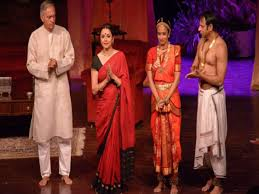
Dance Like a Man By Mahesh Duttani


Born on 7th August, 1958 in Bangalore , Mahesh Duttani is an intellectually stimulating Sahitya Academy Winner . Dattanis play script casts its focus and locus entirely on the urban space, specifically rooted in the dynamics of domestic space. Mahesh Dattani is a Bangalore based dramatist and director. The themes of his plays have attracted the attention of a great number of readers and audiences in theatres. He has tried to bring hidden issues of society such as plight of women and transgender, gender discrimination, homosexuality child sex abuse etc. into light through his plays. He has shown the problems of city life in India in a significant manner in his plays. He has a striking artistic mind that makes him different from other dramatists.


The play Dance Like a Man is a stage play in two acts. The play was first performed at Chowdiah Memorial Hall, Bangalore on 22 September 1989 as a part of the Deccan Herald Theatre. Traditional Dance, in the play, is a form or a tool that enables the writer to tell his story. This drama explores and analyses the gender discrimination in a society, the injustice done only on the term of gender and the preference given to a male child over a female in an Indian family. The play explores the nature of the patriarchical tyranny that even men might be subject to.


In this two-act play, Dattani has tried to knit the story around three generations and their conflicts. The play deals with issues like problem of marriage and career, conflict between the tradition and modernity, patriarchal domination, plight of devdasis, gender roles etc.


Dattani portrays an Indian family in which Amritlal Parekh possessed unquestionable power over Jairaj and Ratna. The action of the play takes place in the big house of Amritlal which is located in centre of the Chennai city.  The drama was written in flash back mode.  Presently, the characters are Jairaj, 62 year old and Ratna, his wife ageing 60; Lata, their daughter, Viswas, her would-be-husband and Amritlal, Jairaj’s father. Amritlal Parekh being the head of the family, he declared himself to be responsible head for taking important decision of all their life. Amritlal as a father wishes his son to have the best, he also worries  that  his  son’s  choices  would  not  make  him anything if he pursued  them any  longer. He  gave his  son the freedom to practice dance instead of cricket as a young boy but he was worried when the hobby for dance as a boy grew into a passion for Jairaj as an adult. Jairaj desired to take his passion for dance as his profession and that would lead his son nowhere and he would not be able to support his family in future. Amritlal feared that his son, unable to take the role of man by the social norms, would fail to win the  love  and  respect  a  wife  has  for  her  husband. 


Amritlal was a reformist and freedom fighter yet a prudish and conservative. He supported India to get freedom from the Britishers. Ironically he controlled and framed strict regulations over his own son’s wishes. He rejects the freedom of his son who wanted to become a Bharatnatyam dancer. Father implements his wish on his son and wants him not to take up dance as his career because it is not a ‘male oriented’ profession. For Jairaj, Dance is a form or a means to express emotions and stands as the tool of defiance, revolt, negation of a particular way of life that was decided by his father, Amritlal. He starts dancing as a hobby.  Dance for his father is the profession of a prostitute, improper for his daughter-in-law and absolutely unimaginable for his son. He forbids Ratna from visiting the old devdasi who teaches her the intricacies of bharatnatyam. He cannot tolerate the sounds of the dancing bells that ring through their practice sessions. Jairaj becomes more headstrong because of the support of his wife, Ratna who also was interested in traditional form of dancing.  Amritlal dislikes the long-haired guru with an effeminate walk and cannot, most of all tolerate the idea of his son –a man- becoming a professional dancer. Amritlal Parekh makes a pact with Ratna. He will permit her career in dance only if she helps him pull Jairaj out of his obsession and make him a ‘manly’ man. Amritlal knew that dance would not help Jairaj to earn enough money and that would make him unworthy in the eyes of his wife Ratna. For Amritlal, dance was good as far as it remains a hobby but it was not proper to be taken as a profession.  Jairaj and Ratna both with a common passion for dance are victims of Amritlal the patriarch of the family. Even after Amritlal's demise Jairaj, his son cannot get rid of the expectations of his father which eventually leads him into depression and alcoholism. In contrast, Ratna at every stage cooperates with Amritlal for her benefit and pursues her passions till the end. Hegemonic masculinity norms can be traced to society's pressure on women to be groomed and look desirable. Man is declared to be the bread earner and he is expected to be in such a profession in which self-esteem is concerned with it, in Indian society. In the other term, man did not get freedom to pursue the profession of an art form like Bharatnatyam. Jairaj’s father equates the art of dance with prostitution.


Dance Like a Man is a play that does not present the character as pure White or Black but it shows their different shades in all possibilities. Jairaj, the male protagonist of the play becomes a victim of gender restrictions. Usually women become victims or suffer due to the patriarchal culture. But this play focuses on the plight of a male who tries to break the conventional roles allotted to his gender by the society. In this process, he loses his identity as an artist in society. Jairaj’s dreams are shattered as his father considers that Bhartanatyam is an effeminate thing that belongs to female gender. 


Shallow materialistic values of art and life v/s old spiritual values


The play deals with the conflict between art and society. It also focuses on the sense of competition among the artists themselves. Young Jairaj and Ratna are practicing dance in the house of Amritlal Parekh. He is representative of the society of the nineteen thirties and forties. In the earlier days Bhartanatyam was associated with temples and rituals. The art was preserved by Devadasis. They were the professional dancers in temples. They were exploited by the priests and rulers. Finally, due to the economic needs these people turned to prostitution. So, the dance form was ignored and neglected till nineteen thirties and forties.


In order to protect and continue any art form, the artist should raise above human weakness. It is a state of human consciousness that wraps up the distinction of male and female into a state of ‘wholeness’. In his self-discovery, Jairaj discovers that the divine essence of human self is neither male nor female. Gender discrimination is integrated in human consciousness and is closely associated with individual choices, self development and self-identity.


PORTRAYAL OF RATNA


The play tells the story that revolves mainly around Ratna, her aspirations as a good dancer and a good mother who expects perfect dancer in Lata. Her dominance over her husband is exposed by the playwright. Lata wants to marry Viswas and to gain favour of her parents, she invites Viswas to her house. When Jairaj and Ratna arrive, though late, they discuss about the forthcoming dance competition of Lata and her preparation. There is no harmony in their married life, both of them want to see Lata a winner and get selected for the Canadian festival. They are talking about mridanist (musician) whose arm is broken not paying attention to Viswas. Later, they apologize for their behaviour and accept his proposal on one condition that he will allow Lata to dance after marriage. Lata wins the competition and both the parents are overjoyed. They read reviews of appreciation by critics in the newspapers about Lata’s performance and speculate over her selection for the Indian Festival in Canada. By the use of flashback technique, the playwright reveals the past of Jairaj and Ratna and their confrontation with Amritlal, Jairaj’s father. Amritlal does not like Jairaj’s passion for the dance, especially for Bharatnatyam. He does not like Jairaj’s idea of growing hair long. He expects his son an adult and grown up and in this matter he expects Ratna’s help. But both Jairaj and Ratna never respect Amritlal’s selfish opinions. They leave the house impulsively but come back after two days humiliated, accepting Amritlal’s shelter. But during these two days, all the three are changed and some sort of transformation is sought in them. Amritlal is ready to pay Jairaj and permits and advises him to perform dance as a profession. He asks Ratna to help him making Jairaj an adult and grown up and that he will permit her to dance. The play ends on a happy note that both Jairaj and Ratna despite earlier differences get mutually united and they perform the dance in the heaven without missing a step or a beat.


Ratna seems to be a selfish woman altogether, a woman of self-esteem and over-ambition. This is also displayed in her relationship with her daughter and an infant son. When she is young, she practices hard to gain perfection in dance. She all the time thinks to win appreciation of the audiences. She forgets her motherly duty towards her infant son, Shankar. She along with Jairaj goes for night performances keeping Shankar in the custody of ayas who offers him opium to make him sleep for more time and the ayah gets long peaceful sleep. She finds Shankar died of overdose of opium. She accuses Jairaj for that also and expected him at home near Shankar when she performed in the public. In her youth, Ratna cares only for the dance and her appreciation by the others. She neglects even her motherly duties. In contrast, when she is old, to be precise 60, she cares for her daughter and her performance. As a good mother, she dreams her daughter successful. She takes hard efforts for that also. She proudly tells Jairaj about Lata’s success and decides to take very serious efforts for her daughter’s success. Ratna is portrayed as a woman who is more concerned with her own career than her duty to the family. In an Indian family system, it is important on the part of a woman to perform dual or plural duties. She has to maintain her self-interest as well as perform roles of sister, daughter, mother, mother-in-law, sister-in-law etc.


Disclaimer: Images have been taken from Google sites.

IMPORTANCE OF SELECTING "BENGALI" AS A SUBJECT AT XI XII LEVEL IN ISC CBSE CURRICULUM

  Hi, I'm Susmita . I've been teaching for about 30 years now. I taught at schools at the outset of my teaching career. So, you can ...