Nelson Mandela
The apartheid regime, the whites created in South Africa, was one of the harshest and most inhumane societies the world has ever known. Elucidate.
Ans. The apartheid regime signified oppression, exploitation and an extraordinary human discrimination. The white regime was based on racial hatred. The blacks in South Africa were deprived of their due rights, privileges, equality and human dignity. After the Boer war, the white groups in South Africa patched up their differences and consolidated their relationship. They imposed a system of racial discrimination against the black people in their own land. It was one of the harshest and most inhumane regimes the world has ever witnessed. The policy of apartheid created a deep and lasting injury in South Africa. Thousands of black patriots sacrificed their lives fighting for the rights and freedom of their people. Thousands of Tambos, Sisulus, Dads, Fishers and Sobukwes underwent sufferings, deep oppression and tortures but never gave up their cause. Eventually, their struggles and sacrifices led the blacks to victory under the able leadership of Nelson Mandela. Their victory was to provide a common platform forthe sake of humanity, for peace, for justice and for human dignity.
Would you agree that the “depths of oppression” create “heights of character? How does Mandela illustrate this? Can you add your own examples to this argument?
Yes, I agree that the “depths of oppression” create “heights of character”. Nelson Mandela explains this by giving instances of great heroes of South Africa who laid down their lives in the long freedom struggle. India is full of such examples. During our freedom struggle, there was a galaxy of leaders of great characters. Probably the brutal oppression of British rule produced so many men of such glaring characters. If we compare this with the quality of political leaders India is having today, then Nelson Mandela seems to be a right instance to honour.
What unintended effect was produced by decades of oppression?
Ans. The decades of oppression made Nelson Mandela a strong person. He set out the goal to liberate the people of South Africa from continuing bondage of poverty, deprivation, suffering and colour discrimination. He decided to win freedom and justice for all.
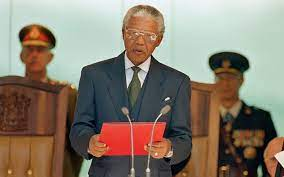
What pained Nelson Mandela on becoming the President of South Africa?
Ans. Nelson Mandela was sad for not being able to thank those African patriots who had fought for independence and sacrificed their lives for it. This pained him that they were no more to see the great human achievement their sacrifices ultimately brought about.
What does Mandela thank the international leaders for?
Mandela felt privileged to be the host to the nations of the world because not too long ago, the South Africans were considered outlaws. He thus thanked the international leaders for having come to witness his swearing in as the first black President of South Africa since this event could be considered as a common victory for justice, peace and human dignity.
Which does Nelson Mandela think is natural, to love or to hate?
A. Nelson Mandela believes love comes more naturally to humans as opposed to hate. No one is born with hatred in his heart for another.Hatred is injected in naive people's mind by way of consistent propaganda.
The inauguration ceremony symbolised a common victory for justice, for peace, for human dignity against the most hated apartheid regime based on racial discrimination. Comment.
The inauguration ceremony of the installation of a democratically elected government in South Africa was an unforgettable event of great historical importance. After the Boer war, the white ‘peoples’, gave up their differences. They imposed the domination of the whites through the apartheid based on racial hatred and discrimination. The inauguration ceremony attracted worldwide recognition. International leaders and dignitaries from more than 140 countries assembled at the Amphitheatre in the Union Buildings in Pretoria. The whole world welcomed it as a common victory for justice, for peace, for human dignity. The grand struggle of the black patriots against the most hated regime of apartheid prevailed. There was a spectacular display of jets and the salute by the bedecked generals with ribbons to President Mandela. It showed the military’s loyalty to democracy. The playing of the two national anthems symbolised a new regime based on equality irrespective of race and colour.
What does Mandela mean when he says he is “simply the sum of all those African patriots” who had gone before him?
When Mandela says that he was ‘simply the sum of all African patriots,’ he relates it to the unforgettable fact that he could identify with the unimaginable sacrifices of all those noble and courageous men who fought for the collective freedom of the African people. He was pained that they are no more and he could not thank them and that they could not see what their sacrifices had eventually achieved.
Why did such a large number of international leaders attend the inauguration? What did it signify the triumph of?
At the inauguration ceremony, there were a large number of international leaders to celebrate the end of apartheid system and to display their support for South Africa. It signified the triumph of justice over prejudice, courage over fear and right over wrong.
When did Mandela’s hunger for self-turn into a hunger for freedom for all his people?
Nelson Mandela gradually realized that freedom was an illusion in South Africa. The Black did not enjoy it. But, it was not the same for the whites. Consequently, he joined the African National Congress, and that was when his “hunger for freedom” became a “greater hunger.”
Can you say how 10 May is an ‘autumn day’ in South Africa?
10 May is an ‘autumn day’ in South Africa because on this day there was the largest gathering of international leaders on South African soil for the installation of South Africa’s first democratic, non-racial government.
Why is 10th May 1994 important for South Africa?
10th May 1994 is important for South Africa because first democratic non-racial government elections were held on this day in the country. Nelson Mandela became the first black president of the country.
How does Mandela describe the systems of government in his country (i) in the first decade, and (ii) in the final decade, of the twentieth century?
(i) In the first decade of the twentieth century, the white-skinned people of South Africa patched up their differences and formed a system of racial domination against the dark coloured people of their own land, thus creating the basis of one of the harshest and most inhumane societies the world had ever known.
(ii) In the last decade of the twentieth century, the previous system had been overturned forever and replaced by one that recognized the rights, privileges and freedoms of all in the domain of South Africa, irrespective of their colour.
What ideals does Mandela set out for the future of South Africa in his speech?
The ideal Mandela aimed to achieve for the future of South Africa in his speech was to liberate the people of South Africa from continuing bondage of poverty, deprivation, suffering, gender and other discriminations.
At the beginning of his speech, Mandela mentions “an extraordinary human disaster”. What does he mean by this? What is the “glorious … human achievement” he speaks of at the end?
The ‘extraordinary human disaster’ that Mandela mentioned at the beginning of his speech refers to the inhuman practice of apartheid i.e., the racial discrimination suffered by the blacks at the hands of whites in South Africa. At the end, the ‘glorious human achievement’ that he spoke refers to the establishment of South Africa’s first democratic, non-racial government.
What did Nelson Mandela pledge when he was sworn in as President?
Nelson Mandela pledged to uphold the Constitution of his country and devote himself to free his people from the slavery of poverty, deprivation, suffering, gender and other discriminations. There would prevail freedom and justice for all.
Where did the ceremonies take place? Can you name any public buildings in India that are made of sandstone?
The ceremonies took place in the campus of the Union Building of Pretoria.
The Parliament House in New Delhi, the Rashtrapati Bhavan in New Delhi, the Supreme Court of India in New Delhi and Madras High Court in Chennai are some examples of Indian public buildings that are made of sandstone.

What did Nelson Mandela remember on the day of the Inaugural Ceremony?
Nelson Mandela recalled the history — the birth of Apartheid, its effect on his people and long fight for freedom. He remembered the freedom fighters that suffered and laid down their lives for freedom. He also remembered what liberty meant to him at different stages of life and his personal feeling for freedom.
Why did such a large number of international leaders attend the inauguration? What did it signify the triumph of?
The presence of large number of international leaders was a gesture of solidarity of the international community to the idea of the end of apartheid. It signified the triumph of good over evil, the triumph of the idea of a tolerant, progressive society without any discrimination.
Describe the contribution of Nelson Mandela in the struggle for independence of the blacks of his country against the hated apartheid regime.
OR
Draw a character-sketch of Nelson Mandela highlighting his struggle against the apartheid regime for the human rights of his people.
Ans. Nelson Mandela was the most prominent of all the black heroes who waged a tireless struggle against the racial-regime in South Africa. He suffered untold sufferings and tortures in prison but led the country to the first democratically elected government in South Africa. Nelson Mandela was not born with a struggler’s mind to be free. Later on, he realised that his boyhood freedom was an illusion. He also realised his concept of freedom in his youth was also ‘transitory’ and was limited to his personal freedom. Only when he joined the African National Congress, his own freedom became more significant for the freedom of his people. He was a frightened young lawyer who was later transformed into a ‘bold criminal’. A family-loving husband was compelled to lead the life of a monk in secrecy. Nelson Mandela is grateful in acknowledging the unimaginable sacrifices of thousands of black heroes for the freedom of their people. Modestly, he accepted that freedom is indivisible. He felt that he could not feel a free and honourable life if his people were in chains.
Nelson Mandela had a wider vision of humanity. For him, freedom was comprehensive and couldn’t be divided. Both the oppressor and the oppressed suufer silently. They needed to be equally liberated. Both of them alike are robbed of their humanity.
Why was the 10th of May, 1994 a red letter day in the history of South Africa?
10th of May, 1994 was a red-letter day in the history of South Africa. It was the day when the hated regime of apartheid came to an end. A new democratically elected non-racial government under Nelson Mandela was to be sworn in. Many international leaders and dignitaries came to pay their respect to the new government.
What “twin obligations” does Mandela mention?
According to Mandela, every person has “twin obligations”, one towards his family and the other, towards his society.
How does Mandela define courage and from where did he learn the meaning of courage?
Nelson Mandela came to know of the meaning of courage from great patriots and comrades in the struggle. They risked their lives and stood up the attacks and tortures of the apartheid regime. He learned that courage was not the absence of fear but the triumph over it. The brave man is not he who doesn’t feel afraid, but he who conquers that fear.
What did ‘being free’ mean to Mandela as a boy, and as a student? How does he contrast these “transitory freedoms” with “the basic and honourable freedoms”?
As a young boy, and a student, Mandela’s idea of freedom was to be able to stay out at night, read whatever he desired and go wherever he chose. On growing up as a man, he came to know that these were “transitory freedoms” he assumed because their “basic and honourable freedoms” had been taken away. There was no liberty in having a peaceful marriage, family and life. Dark-skinned people were deprived of their fundamental human rights. For them, freedom was an “illusion”, digression from the liberty in true sense.
What were the difficulties faced by Nelson Mandela in achieving freedom for his people?
In his endeavour to get freedom for his countrymen from the rule of Apartheid, Nelson Mandela had to undergo many hardships and suffered a lot. This great patriot had to sacrifice the comfort of his home and loving family. He was declared an outlaw for claiming equality for all his fellow black Africans. He was punished, put into jail in isolation. He and his comrades were oppressed and tortured beyond tolerance. He suffered hunger, oppression and injustice but kept the flame of independence burning in his heart. His unmitigated courage, persistent struggle and unparallel sacrifice bore fruit and South Africa got freedom from the rule of Apartheid on 10 May 1994.
Why were two national anthems sung?
On the day of the inauguration, two national anthems were sung, one by the whites, and the other by the blacks. This symbolized the equality of blacks and whites.
How was that site “a rainbow gathering of different colours and nations”?
The end of the apartheid regime was a common victory for peace, justice and human dignity. Leaders and dignitaries of all nations irrespective of their colour, race and religion had gathered there to celebrate that victory. So, the site presented a rainbow gathering of different colours and nations.
Who were the persons sworn in on the 10th of May? What did Mandela pledge to obey?
Mr. de Klerk was first sworn in as second Deputy President. Then Thabo Mbeki was sworn in as first Deputy President. Then, in the end, Mr Nelson Mandela was sworn in as the President of the Republic of South Africa. He pledged to obey and uphold the constitution and devote himself to the well being of the Republic and its people.
Does Mandela think the oppressor is free? Why/Why not?
According to Mandela, the oppressor is as good a prisoner as the oppressed. As soon as the former robs the oppressed of their freedom he himself gets robbed of his humanity. Thus, he thinks that the oppressor too, is not free. The oppressor needed to be liberated from his hatred.
What was born out of the experience of an extraordinary human disaster? Why should humanity be proud of it?
The apartheid regime was an unimaginable human disaster for the blacks of South Africa. The end of the apartheid laid down the foundation of a non-racial democratic regime in South Africa. This government based on human equality and dignity would be an ideal one of which all humanity would be proud.
How did Mandela’s ‘hunger for freedom’ change his life?
Mandela realized in his youth that the freedom of all blacks was snatched away. The hunger for his own freedom became the hunger for the freedom of his people. This desire of a non-racial society transformed him into a virtuous and self-sacrificing man. Thus, he joined the African National Congress and this changed him from a frightened young Law abiding professional into a courageous infidel.
Who was given the rare privilege to be host to the nations of the world on their own soil?
Those who were outlaws not so long ago were given the rare privilege. They had the privilege of hosting and welcoming nations of the world in their soul. The blacks were no more outlaws now but enjoyed equality and human dignity.
After achieving political emancipation what does Mandela want to do in South Africa?
South Africa and the blacks have got their political emancipation. Mandela promises to liberate all his people from the bondage of poverty, destitution, suffering, gender and other discriminations. South Africa will never undergo the oppression of an entire race by another. He wishes the reign of freedom will never end in South Africa.
How does Mandela describe the systems of government in his country (i) in the first decade, and (ii) in the final decade, of the twentieth century?
(i) In the first decade of the twentieth century, the white-coloured people of South Africa gave up their differences and established a system of racial-political domination against dark-skinned people of their own land, thus creating the basis of one of the harshest and most inhumane societies the world had ever known.
(ii) In the last decade of the twentieth century, the previous system had been overturned forever and replaced by one that recognized the rights and freedoms of all peoples, irrespective of their colour.
Why did the same Generals salute Mandela who would have arrested him not so many years ago?
During the apartheid regime, Nelson Mandela was an outlawed rebel and was in prison for many years. After the end of the apartheid, he became the head of the non-racial democratically elected government of South Africa. The same generals who would have put him in prison not so long ago were now obliged to salute the president of the new Republic of South Africa.
What do the military generals do? How has their attitude changed, and why?
The highest military generals of the South African defense force and police saluted Mandela and pledged their loyalty. When the military generals saluted Mandela, he was not unmindful of the fact that not too many years ago, they would not have saluted him, but arrested him. This change has been possible due to the fact that a new, non-racial government was elected and Mandela now became the President of South Africa.
What did the playing of two national anthems symbolise?
On the historic day of the inauguration ceremony of the Republic of South Africa, two national anthems were played. The whites sang 'Nkosi Sikelel-i-Africa’ and the black sang ‘Die Stem’. Neither group knew the lyrics of the anthem they once despised. They would soon know the words by heart.
What do the military generals do? How has their attitude changed, and why?
The military generals saluted Nelson Mandela, the President of South Africa and promised their support to the newly formed democratic government of South Africa. Their attitude has changed because earlier, they were under the rule of the white Apertheid supremacy. During that rule, they would have arrested Mandela as he was considered to be a criminal. Now, with the abolition of Apartheid and the formation of a democratic government, their attitude has also changed.
Why were two national anthems sung?
The two national anthems, one of the Blacks and other of the Whites were sung indicating equality and respect for the entire community irrespective of their colour.
What did the display of jets and military salute symbolise?
There was a spectacular show of South African jets and troop carriers over the Union Buildings. The highest generals of the military and police saluted President Mandela. It was a clear demonstration of the military’s pledged loyalty to democracy, to a free and fairly elected government.
What does courage mean to Mandela?
For Mandela, “courage” does not mean the absence of fear, but the victory over it. A man, who is courageous, is the one who has overcome his fear to fight all the odds.
What did being free mean to Mandela as a boy, and as a student? How does he contrast these “transitory freedoms” with “the basic and honourable freedoms”?
As a boy, Mandela did not feel any necessity to be free as he thought that he was born free. As long as he obeyed his father and abided by the customs of his tribe, he was considered free. As a student, he wanted certain “transitory freedoms” only for himself, such as being able to stay out at night, read what he pleased and go where he chose. He then talks about certain “basic honourable freedoms” such as choosing earning, his living and of marrying and having a family. He makes the contrast between these two freedoms by stating that the transitory freedoms he wanted were limited to him, whereas the honourable freedoms was more important for the society.
Why was the apartheid regime in South Africa was one of the harshest and most inhuman systems in the world?
The apartheid regime was based on the racial discrimination and exploitation of blacks in South Africa. The basic or fundamental rights were only for the whites and the blacks were deprived of these freedoms. Oppression, torture and exploitation of the blacks were common features of the apartheid regime.
What does Mandela mean when he says he is “simply the sum of all those African patriots” who had gone before him?
Mandela wanted to thank the generations before him who had fought for justice. He gathered his courage from those brave heroes and taking inspiration from that, he fought fearlessly for what is right. Thus, he referred to himself as “simply the sum of all those African patriots” who went before him.
How did Mandela’s ‘hunger for freedom’ change his life?
Once Mandela realized his hunger for freedom, his life changed forever. It transformed him from a family-man to a man of his people and a frightened young law abiding into a desperate rebel. He transformed his entire life around fighting for the basic fundamental rights for his community. He became more selfless and virtuous than ever.
Why does Nelson Mandela call himself simply the sum of those African patriots who had gone before him?
Nelson Mandela remembers the sacrifices of thousands of his people who fought against the apartheid regime. Their suffering and courage can never be cemented or repaid. Mandela humbly believes that he was simply the sum of all those African patriots who existed before him.
How did the policy of apartheid create a deep and lasting wound in South African blacks?
The policy of apartheid created a deep and lasting wound in South Africa and the blacks. It would take many years to recover from that deep scar. The racial discrimination unleashed a reign of terror, oppression and brutality on the blacks of South Africa.
What does Mandela thank the international leaders for?
Mandela felt privileged to host the nations of the world because a few months ago, the South Africans were considered outlaws. He thus thanked all the international leaders for having arrived to witness the ceremony of the first democratically elected President since this event could be considered as a common victory for justice, peace and human dignity.
What ideas does he set out for the future of South Africa?
Mandela set out the ideals of poverty alleviation, removal of the suffering of people. He also set the ideal for a society where there would be no discrimination based on gender or racial origins.
How did the policy of apartheid and deep oppression produce patriots of extraordinary, courage, wisdom and generosity?
The policy of apartheid unleashed a reign of terror and oppression on the black people but they could not break their resolution and determination. The deep oppression produced patriots of extraordinary courage, wisdom and generosity. It produced thousands of Tambos, Sisulus, Sadoos, Fischer’s and Sobukwes of their time.
What is the greatest wealth of a country according to Nelson Mandela?
South Africa is rich in minerals and gems. But minerals and gems are not the greatest wealth of a nation. Mandela thinks that the greatest and real wealth of a nation is its people. They are finer and truer than the purest diamonds.
Why does Mandela say that freedom is indivisible? How are the oppressed and the oppressor alike robbed of their humanity?
Nelson Mandela believes that freedom is indivisible. His want for his own freedom became the greater hunger for the liberation of his people. He couldn’t live his life with dignity and self-respect if his own people were bound in chains. The chains on any one of his people were the chains on all of them. The chains on all of his people were the chains on him. Mandela felt that the oppressor must be liberated as much as the oppressed. A man who takes away another’s freedom is a prisoner of hatred, prejudice and narrow mindedness. He is not truly free if he deprives someone of freedom. In the like manner, the oppressed is not free when his freedom is taken away from him. Thus the oppressed and the oppressor alike are robbed of their humanity.
Why did such a large number of international leaders attend the inauguration? What did it signify the triumph of?
Before Nelson Mandela became the President, South Africa was in the grips of apartheid and was thus declared an outlaw by other nations. When Mandela became the first democratically elected President of an Apertheid free South Africa, he abolished apartheid and thus diplomatic relations were re-established with many countries. The inauguration of a new, non-racial government was a historic moment in South African as well as world history. Thus, several distinguished international leaders attended the inauguration. It signified the triumph of justice, peace and human dignity.
How can people be taught to love? Which comes naturally to the human heart — love or hatred?
No one is born hating another person because of his colour or race. People are taught to hate. And if they learn to hate, they can be taught to love. Love comes more naturally to the human heart than hatred.
What does courage mean to Mandela?
On seeing men stand up against attacks and torture without breaking and thus showing strength and resilience that defied the imagination, Mandela learnt that courage was not the absence of fear, but the triumph over it.
Why was it impossible for a man of Mandela’s birth and colour to fulfill the twin obligations?
Ans. In South Africa, no black could fulfill the twin obligations.Any black trying to live like a free human being was punished and isolated. A person who tried to fulfill his duty to his people was separated from his family and was forced to live in secrecy and rebellion.
What ideals does he set out for the future of South Africa?
Mandela had high hopes for the future of South Africa. He pledged to liberate all South Africans from the continuing bondage of poverty, deprivation, suffering, gender and other discrimination. He also expressed his concern that the beautiful land of South Africa would never ever experience racial discrimination again.
Would you agree that the “depths of oppression” create “heights of character? How does Mandela illustrate this? Can you add your own examples to this argument?
Yes, I agree that the “depths of oppression” create “heights of character”. Mandela thought that the decades of brutality and oppression had a tremendous effect of producing African patriots with unimaginable heights of character. Thus, he felt that the greatest wealth of South Africa is its people.
In a similar incident in our country, Bhagat Singh remained courageous while facing utmost cruelty at the hands of the British.
Which does he think is natural, to love or to hate?
For Mandela, love comes more naturally to the human heart than hate
What, according to Mandela, is ‘true freedom’?
Ans. When Mandela was a boy, freedom for him meant to run freely in the fields and to swim in the streams. As a young man, he wanted basic and honourable freedoms, e.g. to earn his living, too many and to have a family. According to Mandela, true freedom means freedom not to be obstructed in leading a lawful life.
Give the character-sketch of Nelson Mandela.
Nelson Mandela was a great patriot. He loved his country and countrymen. For him, the greatest wealth of South Africa is her people.
He had a sacrificing nature. He sacrificed his life of comfort, family and home and jumped into the struggle for freedom. He believes in equality for all. He opposed the rule of Apartheid for which he was declared an outlaw. He was oppressed and tortured in jail for several years but he never broke down and gave up. It showed his levels of traits of tolerance, courage and perseverance.
Why was Nelson Mandela overwhelmed with a sense of history? Give the birth and finally the burial of the apartheid regime in South Africa.
On the day of the inauguration of the Republic, Nelson Mandela became emotional with a sense of history. Nelson Mandela faught against the hated regime for decades. After the Boer war, the white groups came together. They imposed the domination of the whites over the majority population of South Africa. The birth of the apartheid was the birth of one of the harshest and inhumane regimes in the world. It was based on political discrimination and oppression on the basis of colour of the skin. Deep oppression and atrocities produced thousands of black patriots. They sacrificed their lives for the freedom of their fellow men. The determined struggle of these black heroes produced their victory. A democratically elected government headed by President Nelson Mandela was installed on the 10th of May, 1994.
Disclaimer: Images have been taken from Google sites


