Search This Blog besttutorskolkata.blogspot.com www.dbhattacharjee.com

Showing posts with label IGCSE. Show all posts

Wednesday, May 3, 2023

I Know Why the Caged Bird Sings, Maya Angelou, American English literature, English Project, ICSE, ISC, IGCSE, IB


"I Know Why the Caged Bird Sings" is an autobiographical coming-of-age novel written by Maya Angelou. Published in 1969, it is the first volume of Angelou's seven-volume memoir series. The book explores themes of racism, identity, self-discovery, and resilience, providing a powerful account of Angelou's early years.


In Angelou's narrative, the caged bird represents the oppressed African American community, while the free bird represents the privileged white community.


The book begins with Angelou's childhood in Stamps, Arkansas, during the Great Depression. She describes the challenges she faced growing up in a segregated society and the impact of racial discrimination on her self-esteem and sense of identity. Angelou recounts her experiences of racism, such as being denied services due to her race and witnessing the injustices inflicted upon African Americans.


One of the central themes of the book is the power of literature and language as a means of escape and self-discovery. Angelou finds solace in books and poetry, which serve as a source of inspiration and empowerment throughout her life. Through her love for reading and writing, she discovers her own voice and the transformative potential of words.


The memoir also delves into Angelou's personal struggles, including the trauma of sexual abuse. She bravely confronts these experiences and their impact on her emotional well-being. Despite these hardships, Angelou portrays resilience and strength, emphasizing the importance of perseverance and the ability to rise above adversity.


"I Know Why the Caged Bird Sings" is a poignant exploration of the African American experience, capturing the complexities of race, gender, and identity in mid-20th century America. It highlights the power of literature, the resilience of the human spirit, and the importance of confronting and overcoming one's past. The book remains a significant contribution to American literature and a testament to Maya Angelou's remarkable life and literary talent.


In "I Know Why the Caged Bird Sings," Maya Angelou vividly portrays the harsh realities of racial discrimination prevalent in the society she grew up in. Angelou describes the strict segregation enforced during her childhood in Stamps, Arkansas. She depicts separate facilities for black and white individuals, such as schools, public transportation, and even public restrooms. The segregation laws known as Jim Crow laws were designed to enforce racial separation and perpetuate inequality.


Angelou recounts instances where African Americans were treated unfairly solely because of their race. For example, she describes being refused service at white-owned establishments or being given inferior treatment compared to white individuals. These experiences highlight the systemic racism and the dehumanising effects of such discrimination.


The memoir also touches on the violence and threats faced by African Americans. Angelou recalls the brutal murder of a young black man, Emmett Till, and the impact it had on her and the wider community. This event highlights the extreme racial violence and the fear that permeated the lives of African Americans during that time.


Angelou explores the internalized racism within the African American community. She portrays the damaging effects of societal expectations and stereotypes on the self-esteem and self-perception of individuals. Through her own experiences, Angelou sheds light on the struggle to overcome the internalized messages of inferiority that are ingrained through a racist society.


By vividly depicting these experiences and reflecting on their profound impact on her life, Angelou brings to light the deeply ingrained racial discrimination and inequality faced by African Americans during the era she writes about. Through her memoir, she raises awareness and promotes understanding of the systemic racism that shaped her personal journey and the experiences of many others.



The concept of the free bird and the caged bird is a recurring metaphor throughout the memoir.


The most obvious difference is that the free bird represents freedom, while the caged bird symbolises confinement. The free bird is able to soar and explore without limitations, while the caged bird is trapped within the confines of its cage.


The free bird has limitless opportunities and choices. It can explore new territories, enjoy the beauty of nature, and experience the world without restrictions. In contrast, the caged bird is limited in its movements and experiences, confined to the space of its cage and denied the freedom to explore the world.


The free bird represents privilege, often associated with the white community in the book. It symbolises the advantages and freedoms enjoyed by those who are not subjected to racial discrimination. On the other hand, the caged bird represents the oppressed African American community, facing limitations, discrimination, and the oppressive systems of racism.


The free bird has the ability to express itself freely through its songs and flight. It can vocalise its desires, emotions, and experiences without fear or constraint. In contrast, the caged bird is silenced and constrained by its surroundings, unable to fully express itself or communicate its true nature.


The free bird experiences joy, exhilaration, and the pleasures of freedom. It revels in its ability to explore, fly, and experience life to the fullest. In contrast, the caged bird suffers from the loss of freedom, yearning for escape and longing for the same joy and liberation experienced by the free bird.


Through the contrasting imagery of the free bird and the caged bird, Angelou emphasizes the stark disparities and injustices faced by the African American community in a racially segregated society. The metaphor serves to highlight the desire for freedom, equality, and the struggles endured by those who are oppressed and denied their basic rights.


Disclaimer: Images have been taken from the Google sites.

Tuesday, May 2, 2023

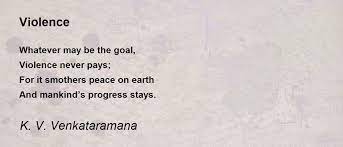
VIOLENCE NEVER PAYS, ENGLISH PROJECT, ICSE, ISC, CBSE, IGCSE, INTERNATIONAL BACCALAUREATE

 VIOLENCE NEVER PAYS, ENGLISH PROJECT, ICSE, ISC, CBSE, IGCSE, INTERNATIONAL BACCALAUREATE 


Violence plagues the world and has plagued the world through all history. Structural Violence may last for a specific period. Experience has established that the after-effects of Structural Violence linger on for generations. It destroys the very fabric of society.


The statement "violence never pays" is a moral and philosophical belief that emphasizes the negative consequences and long-term ineffectiveness of resorting to violence. Here are a few reasons why it is often argued that violence does not lead to desirable outcomes:

Escalation: Violence tends to escalate conflicts rather than resolve them. Responding to violence with more violence often leads to a cycle of retaliation, creating a continuous loop of harm and destruction. It becomes increasingly difficult to break free from this cycle and find peaceful resolutions.

Human suffering: Violence typically results in human suffering, both for the victims and the perpetrators. Physical harm, emotional trauma, and loss of life are common outcomes of violent acts. The pain inflicted upon individuals and communities can have long-lasting consequences, perpetuating a cycle of hatred and revenge.


Social and economic costs: Violent actions can have severe social and economic costs. The destruction of property, infrastructure, and resources can hinder development, destabilize societies, and lead to economic decline. Rebuilding and recovery efforts require significant resources and time, diverting them away from more constructive endeavors.

Undermining trust and cooperation: Violence erodes trust and cooperation among individuals and communities. It creates an atmosphere of fear, suspicion, and hostility, making it harder for people to work together towards common goals. Building sustainable and harmonious relationships becomes challenging in an environment marked by violence.

Legal and ethical consequences: Violence often violates laws and ethical principles. Engaging in violent behavior can result in legal repercussions, ranging from criminal charges to imprisonment. It is essential to respect the rule of law and promote ethical standards to maintain a just and orderly society.


Of course, it is important to acknowledge that historical examples exist where violence has been used to achieve short-term gains or secure certain objectives. However, the long-term consequences and negative impacts associated with violence are widely recognized, and non-violent means of conflict resolution are generally considered more desirable for fostering peace, justice, and stability.

Wars produced huge numbers of casualties. There is no doubt that the physical and psychological impacts of the atomic attacks continued for generations long after the actual attack. Similarly, the disruption caused in society continues for generations long after the active phase of the structural violence.

Hence, one would conclude that violence is and will always be evitable and abominable.


Disclaimer: images have been copied from the Google sites.

Wednesday, March 15, 2023

SHE WALKS IN BEAUTY ~ LORD BYRON, ENGLISH POETRY, ICSE, ISC, CBSE, IGCSE, BA ENGLISH HONOURS, MA ENGLISH


SHE WALKS IN BEAUTY ~ LORD BYRON


"She Walks in Beauty" is a poem by Lord Byron, first published in 1815. The poem is a tribute to a woman's beauty and her grace. It is considered one of Byron's most famous and widely anthologized works. 

Structure: The poem is structured into three stanzas, each with six lines, and follows an ABABAB rhyme scheme. The language is lyrical and evocative, with the use of vivid imagery and contrasting images. 

It is a poem that is rich in imagery. Lord Byron's use of language creates vivid pictures in the reader's mind, bringing the woman's beauty to life in a powerful way. Some of the key imagery in the poem includes: 

"She walks in beauty, like the night / Of cloudless climes and starry skies" - In these opening lines, the woman's beauty is compared to the night sky. This imagery creates a sense of mystery and wonder, as the reader is drawn into the woman's beauty.


"One shade the more, one ray the less, / Had half impaired the nameless grace" - Here, the speaker suggests that the woman's beauty is delicate and fragile. The use of light and shadow adds depth and complexity to the imagery, and creates a sense of balance and harmony. 

"And on that cheek, and o'er that brow, / So soft, so calm, yet eloquent" - In these lines, the woman's face is described as both peaceful and expressive. The use of contrasting images creates a sense of tension and complexity, highlighting the woman's beauty and inner grace. 

"A mind at peace with all below, / A heart whose love is innocent" - The poem's imagery extends beyond physical appearance to capture the woman's inner beauty. The use of natural imagery, such as the peace of mind and innocence of heart, creates a sense of purity and goodness. 

Overall, the imagery in "She Walks in Beauty" is central to the poem's power and beauty. Lord Byron's use of language creates a vivid and captivating picture of the woman, emphasizing her beauty, grace, and inner goodness. 

Stanzawise Explanation: The first stanza describes the woman's physical appearance, using imagery of light and darkness to create a sense of harmony and balance. The speaker notes that the woman's beauty is not solely based on her physical appearance but also on her inner qualities, such as her kindness and intelligence. 

The second stanza continues with the theme of the woman's inner beauty, describing her as "a heart whose love is innocent." The speaker portrays her as a symbol of purity and goodness, contrasting her with the darkness of the night sky. 

The third and final stanza brings together the contrast between light and darkness, praising the woman's beauty as a combination of both. The speaker suggests that the woman's beauty is so powerful that it can even bring out goodness in the midst of darkness.

Overall, "She Walks in Beauty" is a romantic poem that celebrates the beauty and grace of a woman, while also recognizing the importance of inner beauty and character. The poem's use of vivid imagery and contrasting images creates a sense of harmony and balance, adding to its overall appeal.


Inner Theme:

"She Walks in Beauty" is a poem written by Lord Byron, which describes the beauty of a woman. The poem's inner theme is the speaker's admiration of a woman's external and internal beauty. The poem's opening lines describe the woman's physical beauty, with references to her "raven" hair and "smiles that win." However, the speaker also notes that her inner beauty is just as impressive, describing her as having a "mind at peace with all below." Throughout the poem, the speaker celebrates the harmony between the woman's physical and spiritual beauty. He sees her as a perfect embodiment of grace and goodness, and his admiration for her shines through in his elegant and lyrical language. In summary, the inner theme of "She Walks in Beauty" is the speaker's appreciation of a woman's beauty, both inner and outer, and how these qualities combine to create a striking and captivating presence.


Byron’s mastery: 

"She Walks in Beauty" is a special poem because it captures the essence of beauty and admiration in a unique and elegant way. Lord Byron's use of language and imagery creates a vivid picture of the woman's beauty, while also highlighting the importance of inner beauty. 

The poem's structure, which consists of three stanzas with six lines each, creates a sense of balance and harmony, which further emphasizes the theme of the woman's beauty. The use of contrast, such as the contrast between light and dark in the woman's appearance, adds depth to the poem and makes it more memorable. 

Additionally, "She Walks in Beauty" is considered a romantic poem and has been widely appreciated for its portrayal of idealized love. The poem's timeless quality has made it a favorite among readers and has inspired many adaptations and interpretations over the years.

Overall, Lord Byron's "She Walks in Beauty" is a special poem because it combines exquisite language, vivid imagery, and timeless themes to create a work of art that celebrates beauty and admiration in a unique and unforgettable way.


Lord Byron’s Romaticism: 

"She Walks in Beauty" is a poem that is associated with the Romanticism movement, which was a literary and artistic movement that emerged in the late 18th and early 19th centuries in Europe. Romanticism celebrated individualism, emotion, nature, and imagination, and rejected the rationalism and order of the Enlightenment. 

The poem's Romanticism is reflected in its celebration of beauty and the natural world. The woman's beauty is described in terms of the natural world, with references to the stars, clouds, and night. The speaker sees her as a perfect embodiment of grace and goodness, and his admiration for her shines through in his elegant and lyrical language. 

Furthermore, the poem's emphasis on emotions and feelings is another hallmark of Romanticism. The speaker's admiration for the woman is based on his emotional response to her beauty, which he describes as a "tender light" that shines from within her. 

Finally, the poem's use of contrast, such as the contrast between light and dark in the woman's appearance, is another characteristic of Romanticism. This contrast creates a sense of tension and complexity that is typical of Romantic literature. 

Overall, "She Walks in Beauty" is a poem that embodies many of the key themes and characteristics of Romanticism, including a celebration of beauty, a focus on emotions and feelings, and an emphasis on the natural world and the power of imagination.


Disclaimer: Images have been taken from the Google sites.


The Soul’s Prayer, ENGLISH POETRY ANALYSIS, ICSE, ISC, CBSE, IGCSE, BA ENGLISH HONOURS, MA ENGLISH


The Soul’s Prayer by Sarojini Naidu


In childhood’s pride I said to Thee:

‘O Thou, who mad’st me of Thy breath,

Speak, Master, and reveal to me

Thine inmost laws of life and death.


‘Give me to drink each joy and pain

Which Thine eternal hand can mete,

For my insatiate soul would drain

Earth’s utmost bitter, utmost sweet.


‘Spare me no bliss, no pang of strife,

Withhold no gift or grief I crave,

The intricate lore of love and life

And mystic knowledge of the grave.’


Lord, Thou didst answer stern and low:

‘Child, I will hearken to thy prayer,

And thy unconquered soul shall know

All passionate rapture and despair.


‘Thou shalt drink deep of joy and fame,

And love shall burn thee like a fire,

And pain shall cleanse thee like a flame,

To purge the dross from thy desire.


‘So shall thy chastened spirit yearn

To seek from its blind prayer release,

And spent and pardoned, sue to learn

The simple secret of My peace.


‘I, bending from my sevenfold height,

Will teach thee of My quickening grace,

Life is a prism of My light,

And Death the shadow of My face.’


Saojini Naidu’s poetry deals with the problems of life and death as the life is full of pains, sorrows, confusions and problems. Naidu prefers to address God who is the maker of this world and creator of life and death. She writes this poem in the voice of a child who is a girl of only thirteen years old. Child is the poetess herself. She poses her faith in God and feels pride to be His innocent child. The child makes a blind prayer to God and pleads with Him to reveal the various metaphysical aspect of life.


It is a devotional poem of Sarojini Naidu. It was published in her collection of poems The Bird of Time in 1912.  It illustrates the truth behind life and death. In her childhood the poetess wants to know the secrets of life and death. She is open to experience both joy and sorrow. She wants to know the depth of love. The poem hints at the metaphysical ruminations of Sarojini Naidu as her soul seeks the help from the Almighty. The invocation begins with all the innocence and purity of a child’s pride. The poetess wants God to enlighten her on the most basic and innermost laws of Life and Death. She wants to have an in-depth comprehension on the twin-sided aspects of Life.


Purity doesn’t come cheap; we must endure the difficulties we chose for this life as souls and live with the consequences of our choices and actions – choices and actions that define us as we go along. Then God answers.


There are imageries in the poem. She wants to drink ‘life to the lees’ as she aspires for the two extremes of emotions-pain and joy. She is eager to solve the mystery of life and death. God accepts the prayer of the poetess. He answered her prayer. He says that her innocent soul will experience joy, pain, fame, love and all. Pain will purify her soul. For her, both gift and grief are welcome blessings that she craves for. She longs for the intricate wisdom of love and life. She also deeply craves for the mystic knowledge of the grave that has remained unexplored.


‘Spare me no bliss, no pang of strife,
Withhold no gift or grief I crave,
The intricate lore of love and life
And mystic knowledge of the grave.’


Humanity will have to go through the pain many, many lives. But eventually the lesson will be learned. Pain “cleanses us like a flame, purging the dross from our desire”.


The Spirit’s yearn, a seeking cry, comes not from us but from God Himself! God cries for us, His children, begging us to come home. The release is a call to the waking up that takes place when blind prayer turns into a sighted realisation: we never actually needed to learn through pain, and there was never anything to fear. Mystic mystery is a simple secret, nothing more. 


She acknowledges God’s answer to her prayers, and is assured that He would heed to her prayers. He ascertains that her soul would experience all the passionate raptures and unfelt despairs. God informs her that after having experienced all the love, comforts, and highs and lows of life, her soul would not be satisfied but it will crave to be released from the blind prayer. Then, drained and forgiven, her soul will beg to learn about peace, instead of passion. It will want to know how to leave the fire and flame behind, the burning and cleansing, and simply experience quiet, underrated peace. It will wish to achieve salvation.


The Almighty deals with her in a stern but down-to-earth manner. “Lord, Thou didst answer stern and low.” He addresses her as “child” mirroring the intimacy and intricacy of the bond that they shared. It also reflects protectiveness and a sense of security. The term ‘unconquered” implies want of experience and therefore, a ‘virgin’ soul. It is possible only by the blessings of God that’s why she makes blind prayer to Him. Joy and pain bring one to near God because they are the echoes of the human heart and explain the meaning of light and shadow. 


He assures the poetess that she shall drink of both joy and fame. The word ‘drink’ connotes the act of relishing and quenching of one’s thirst. Love will consume her with fiery passion. Fire is the only basic element with the exquisite quality of cleansing without polluting itself unlike the other elements. The poetess shall be cleansed by pain akin to the flame of purgation. It will purify the dross or impurities from her desire and thereby render it pure.


‘Thou shalt drink deep of joy and fame,
And love shall burn thee like a fire,
And pain shall cleanse thee like a flame,
To purge the dross from thy desire.


Her chastened spirit will seek salvation. As her soul will be satiated of these extremes, she will now long for peace. In such a stance, it will seek release from its blind, unconditional prayer .The prayer places infinite faith in God without rationalisation. It will be ‘spent’ with time, experience and incessant praying. In such a state it would effortlessly master the secret of His peace. The word ‘secret’ is used to highlight the enigma and aura behind this spiritual transcendence.


I, bending from my sevenfold height,
Will teach thee of My quickening grace,
Life is a prism of My light,
And Death the shadow of My face.’


Life is compared to the prism of the divine light. Death is the shadow of this divinity, it is the other side of the same coin called ‘life’. A man needs to be qualified enough to experience the bitterness as well as the bliss.


Allegory of ‘seven’ : Seven has always been an attribute to describe divinity whether it has been used with reference to phrases like ‘seventh heaven’ or in biblical allusions regarding God’s creation of the world in seven days. He will imbibe in her His ‘quickening grace.’ His grace is all-encompassing, flexible and swift, and hence the adjective “quickeining”. Life is but a prism of His light where the white light (symbolic of purity) enters the realm of the earth and fills our life with different hues and colours. Death is the shadow of his face as destruction is inevitable for creation, meaningful change and procreation.

Disclaimer: Images have been incorporated from the Google sites.

Sunday, July 31, 2022

ENGLISH SPEAKING, ENGLISH GRAMMAR & VOCABULARY, SAT, GRE, TOEFL, ENGLISH WRITING SKILL, ICSE, CBSE, IGCSE, ISC

 I’ve noticed many students face difficulty in expressing their thoughts in good English. They do not have word stock. Their grammar is poor. Many guardians pay less attention in the formative days of class 5-8 to heed English learning. While specialist attention is necessary and a good teacher will charge a premium, they shy from spending when it is most needed… read on  https://besttutorskolkata.blogspot.com/2022/03/tuition-fee-expensive-tutor-low-cost.html


In our everyday lives, grammar is everywhere. We use it at home, in school, at work, and in the streets. It is the core of a language regardless of one’s culture, mastery and understanding of it. Being able to use grammar also widens one’s vocabulary. It opens doors of opportunities for us to be able to communicate freely, with no barriers and hesitations.


If you follow the conventional route to educate your children, in every likelihood, the child is going to earn average. In India, average (about 89%) people earn anywhere between Rs 10,000/- & 15,000/- per month. Do not see a flowery dream that only your child will do exceptionally well without the much needed proactive measure. What is that proaction? To change with the changing time.


World is moving towards more soft and communication skills than domain knowledge. In the very near future, repetitive work will be replaced by technology. Business will move on constant innovation and convincing capability.


Many businesses made a significant turn around only because someone convinced somebody else to start a preferential contract. Even if you are to get a high paying consultancy job or Tech job, you must convince the authority. In short, insane money will be earned by people having GOOD ENGLISH SPEAKING CAPABILITY. Others will continue to slog all their life.


Do you want to increase your child’s ENGLISH? Well, start from the scratch. Begin with vocabulary and grammar. Pay premium when the child is in class 5 or 6. The PUBLIC SPEAKING DEVELOPMENT will take the child far.


Grammar is important because it is the language that makes it possible for us to talk about language. Grammar names the types of words and word groups that make up sentences not only in English but in any language. As human beings, we can put sentences together even as children—we can all do grammar. But to be able to talk about how sentences are built, about the types of words and word groups that make up sentences—that is knowing about grammar. And knowing about grammar offers a window into the human mind and into our amazingly complex mental capacity.


People associate grammar with errors and correctness. But knowing about grammar also helps us understand what makes sentences and paragraphs clear and interesting and precise. Grammar can be part of literature discussions when we and our students closely read the sentences in poetry and stories. And knowing about grammar means finding out that all languages and all dialects follow grammatical patterns.


If you understand the nature of language, you will realize the ground for your linguistic prejudices and perhaps moderate them; you will also more clearly assess linguistic issues of public concern, such as worries about the state of the language or what to do about the teaching of immigrants. Studying the English language has a more obvious practical application: It can help you to use the language more effectively.


** Can you solve the above Grammar questions??**

My 38 years’ long association with guardians has found an innate tendency to neglect this area, save money by employing any gig unprofessional tutor. Often, most of them would engage a tutor who will teach multiple subjects. A SPECIALIST NEVER TEACH MULTIPLE SUBJECTS. Hence, they lose out. In teaching, grammar plays a vital role in how effectively a teacher conveys his lessons. Knowing the highs and lows of the language could make or break a lesson. In one instance, a teacher could adjust the level of difficulty of words to be used if he is familiar with grammar. This could lead to a more enjoyable experience for both teachers and students. One more thing, being able to express yourself confidently as a teacher with the right grammar commands respect and positive outlook from your students. Mastering proper grammar could inspire your students to also strive harder in learning the language.


There are certain situations in which English grammar is especially important. For example, if you’re going for a job interview in an English-speaking country, the employer will be interested in the quality of your spoken and written English.Grammar is even important for your social life. Did you know that people on online dating apps are 14% less likely to chat with someone who uses poor grammar? Plus, when you’re meeting new people or visiting new places, the last thing you want is to be misunderstood! To avoid confusing your friends, or even ordering more drinks than you intended, you need to have a firm idea of how to structure your words.


Learning proper grammar is important because it is the language that makes it possible for us to effectively talk about language. Grammar names the words and word groups that make up sentences not only in English but in almost any language. As humans, we can put sentences together even as children. But to be able to talk about how sentences are built, about the types of words and word groups that make up sentences—that is knowing grammar. With this, knowing about grammar opens a window into the human mind and into our amazingly complex mental capacity of knowing and learning a specific language. We always associate grammar with errors and correctness. But keep in mind, knowing about grammar also helps us understand what makes sentences and paragraphs clear and interesting, pleasant and precise.


** Can you solve the above Grammar questions??**

Any middle class family just can not afford the expenses to send their ward abroad for higher studies. Now, we all are aware that if the student takes a valued BBA, MBA Tech course from the reputed universities abroad, the chances of earning in Dollars/Pounds increase making him/her super rich in just 5 years !!!


Today, scholarships are available. Remember, these developed countries also need talents to oil their economy. So, they institute SAT, GRE, TOEFL every year to get the best talent. 90% of these competitive exams bear the weightage on ENGLISH APPLICATION AND VOCABULARY. Which means, your good English Skill can place you in a good university at BARE MINIMUM EXPENSE which the middle class can afford. Besides, the competition is not as CRAZY AND STEEP AS THOSE FOR ENTERING IIT, MBBS etc. Any average student may crack under the able guidance.


Grammar refers to the rules and regulations that govern spoken and written language. Grammar is the code that makes language work. Through proper grammar, we can communicate clearly in a way readers or listeners understand. Good grammar is key to effective communication, whereas bad grammar leads to surprising mistakes. Its purpose is to build a bridge between what you mean and what the reader or listeners understand. With clear, strong grammar skills, you can ensure people understand what you’re trying to say or write, even if English isn’t your native language.

Disclaimer: Images have been taken from Google sites.

IMPORTANCE OF SELECTING "BENGALI" AS A SUBJECT AT XI XII LEVEL IN ISC CBSE CURRICULUM

  Hi, I'm Susmita . I've been teaching for about 30 years now. I taught at schools at the outset of my teaching career. So, you can ...